
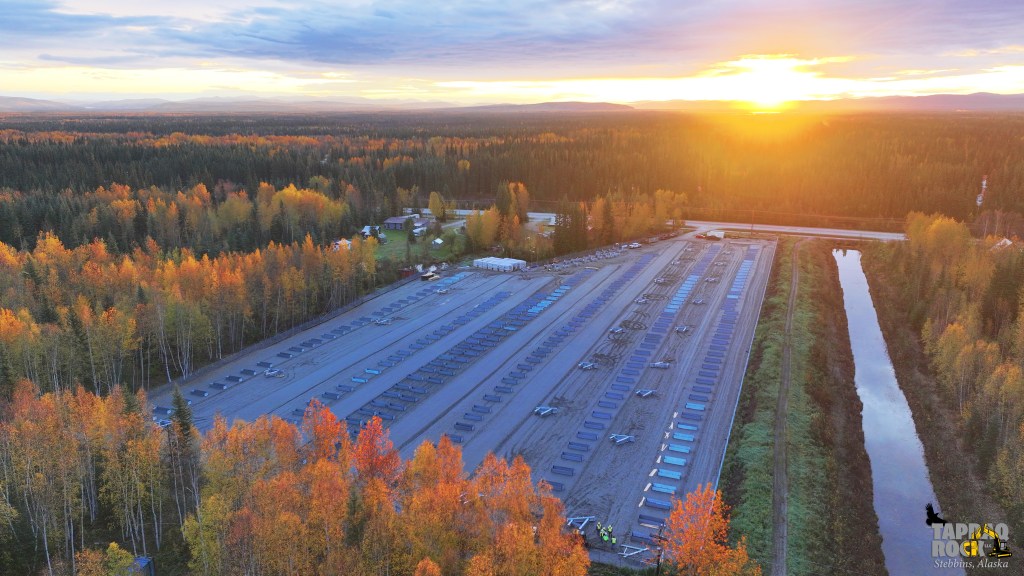
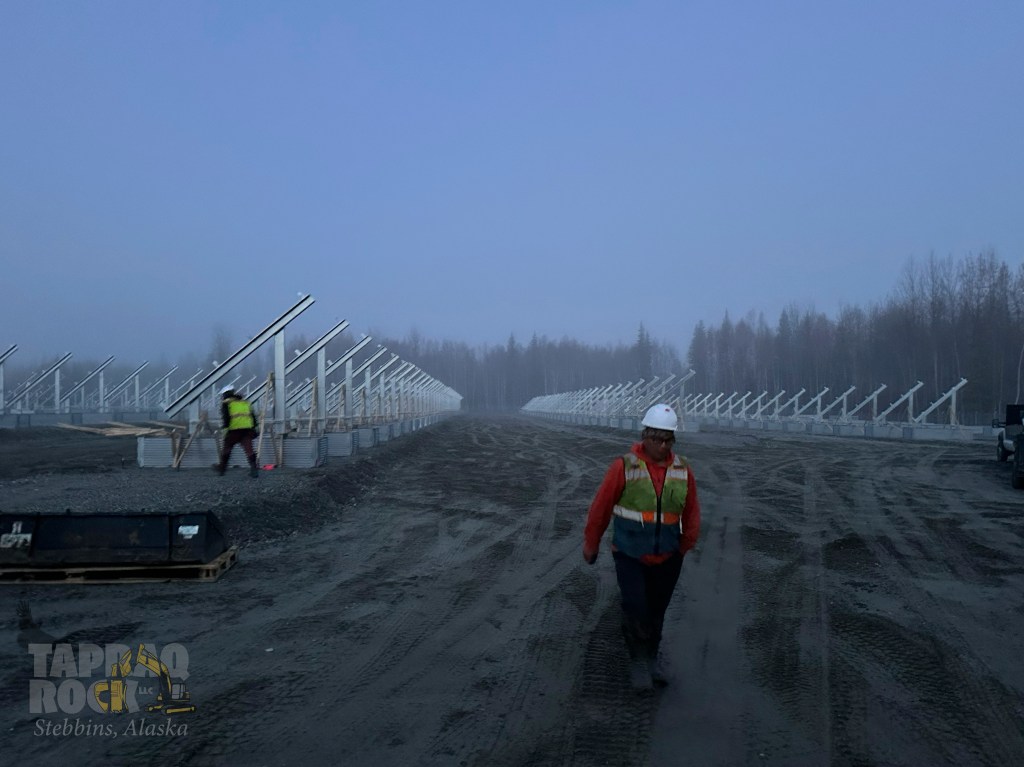
Tapraq employees display Western Alaska work ethic in Interior Alaska.
Remote Alaskan communities have long relied on large diesel generators to power small, local electric grids. Burning vast quantities of diesel at prices as high as $9 to $15 per gallon or more, these generators roar along, belching exhaust 24 hours a day, except when they break down. They supply marginally reliable power only through the unflagging effort of local and traveling technicians who often perform miracles to keep them turning.
That’s how Bush communities have always produced electricity.
But the forward-thinking Tanana Chiefs Conference (TCC) believes there is a better way, and is willing to invest the effort to create it. One step forward is the use of solar power.
Konstantine Misyuk, of Gensolar, a leading solar energy solutions provider in Alaska, said that, while many in Alaska are skeptical of solar energy production here, solar energy is a very attractive option in Alaska. He explained that solar energy systems, designed and installed correctly for Alaska’s unique challenges, are very effective in offsetting the high energy costs and environmental impacts of existing power generation systems, while offering near maintenance-free operation and a reduction in costs and risks of transporting of fuels.
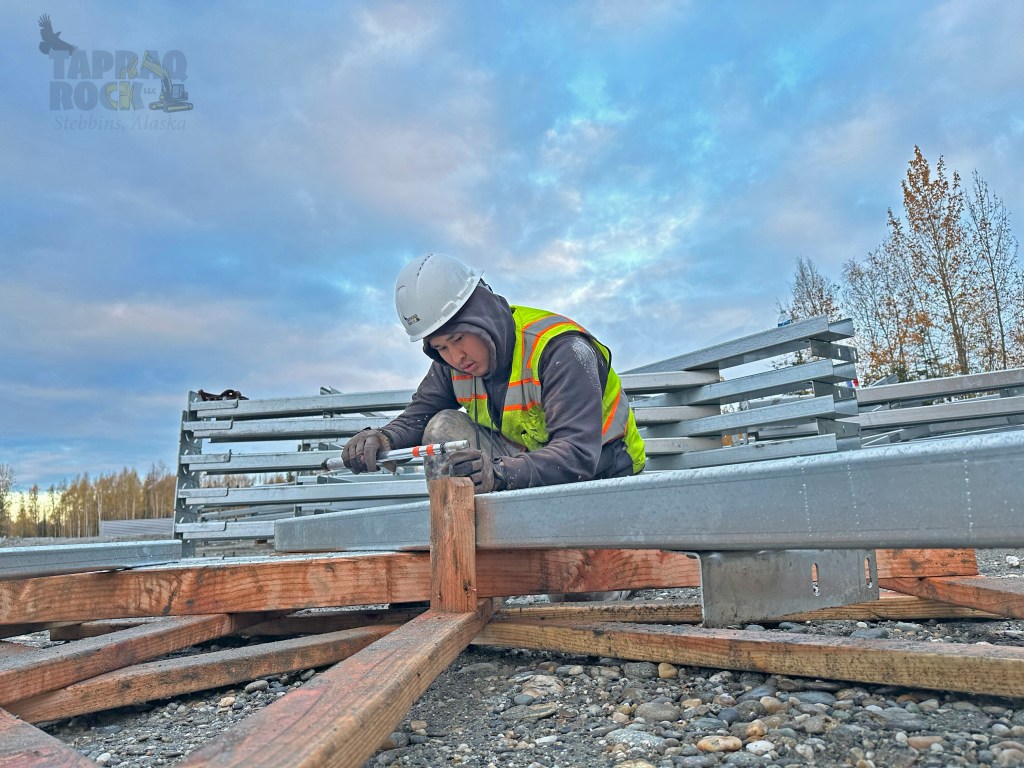
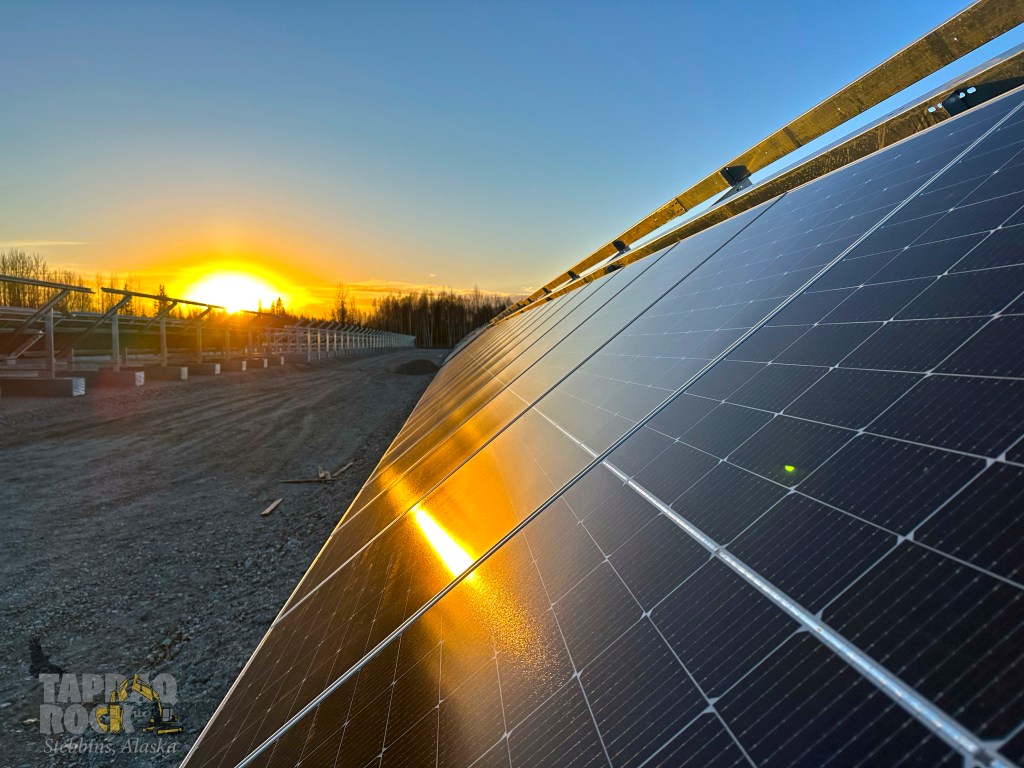
“Solar energy popularity is increasing in Alaska due to its abundance of sunshine, commitment to renewable energy, and cost-effectiveness,” Konstantine informed us, “With over 200 days of sunshine each year and a daily average of 3.99 sun hours, Alaska is an ideal location for solar energy production.”
Tanana Chiefs Conference launched an ambitious plan to install solar energy systems in their communities across interior Alaska. Recognizing Tapraq Rock, LLC’s commitment to local hire and training, and to bringing industry and economic improvement to Alaska Native communities, Tanana Chiefs Conference invited Tapraq to bid on these projects.
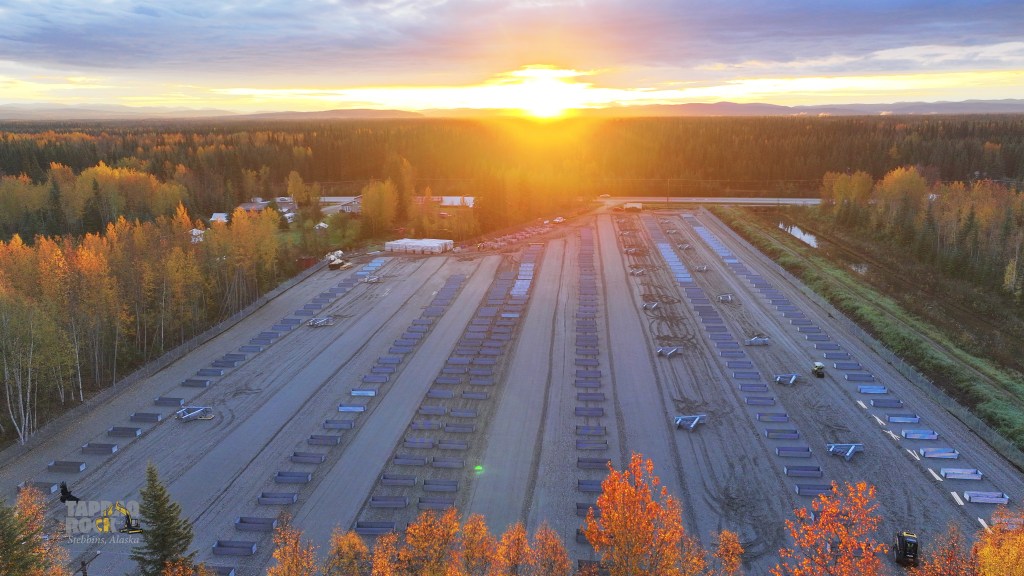
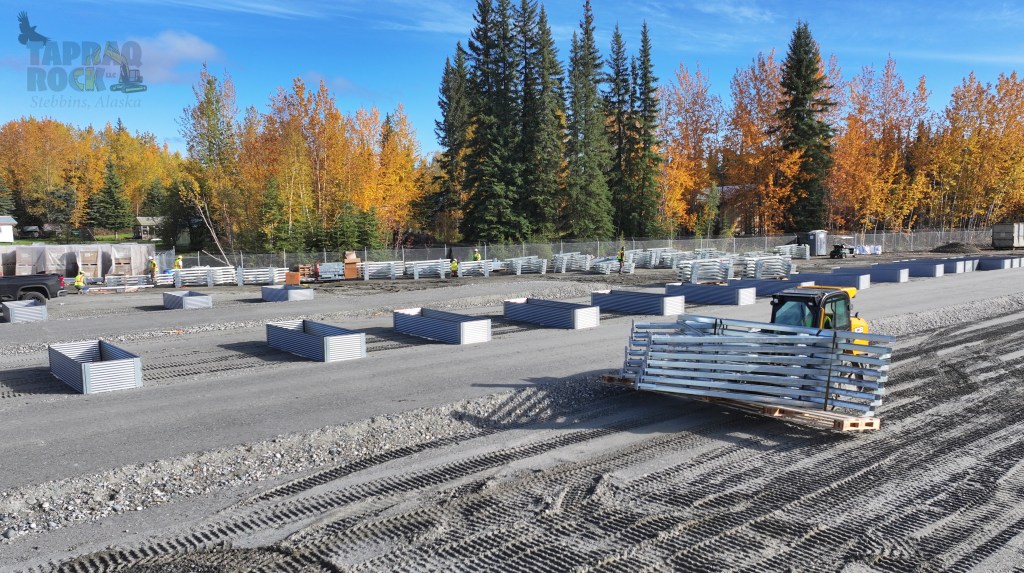
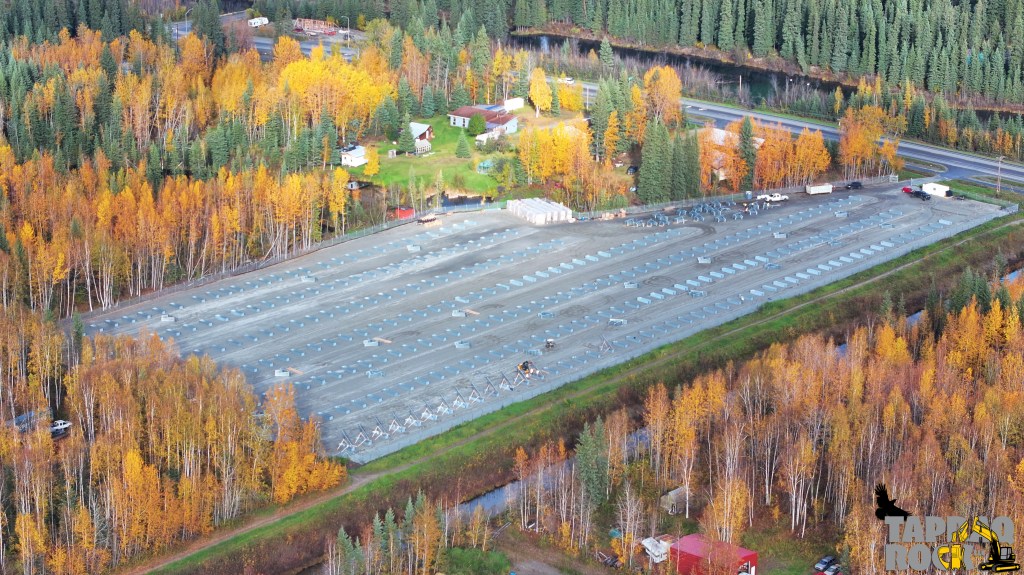
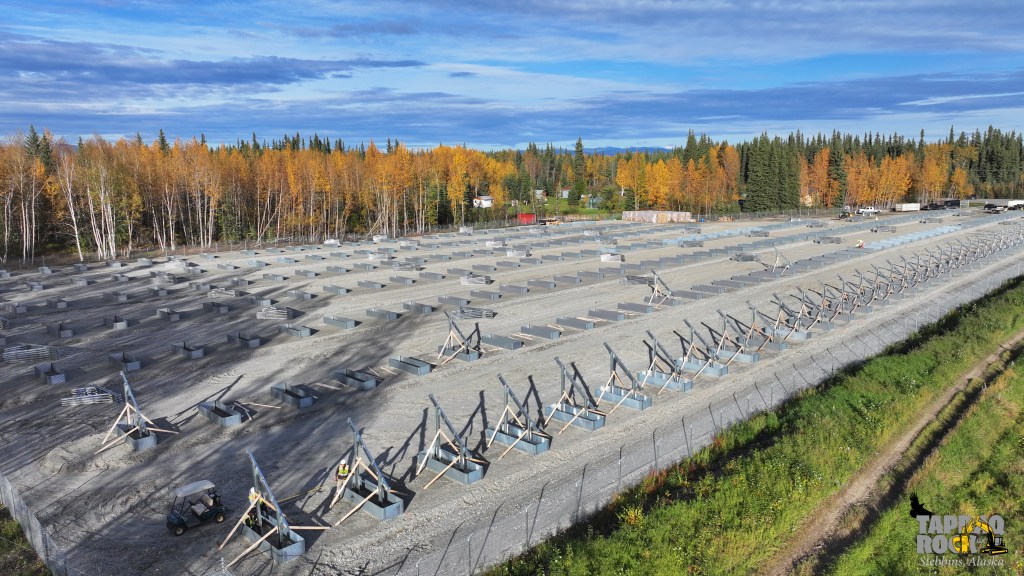
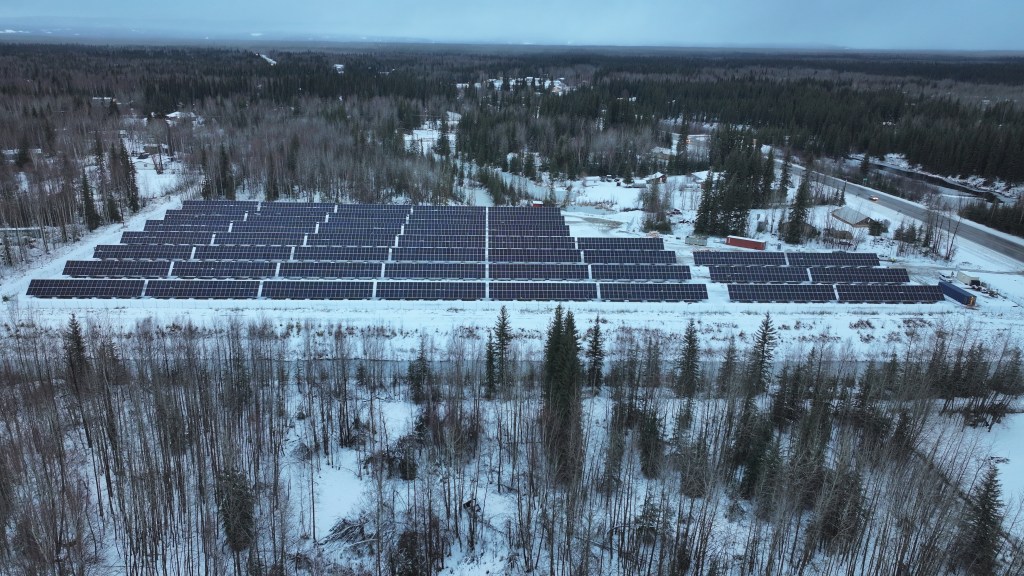
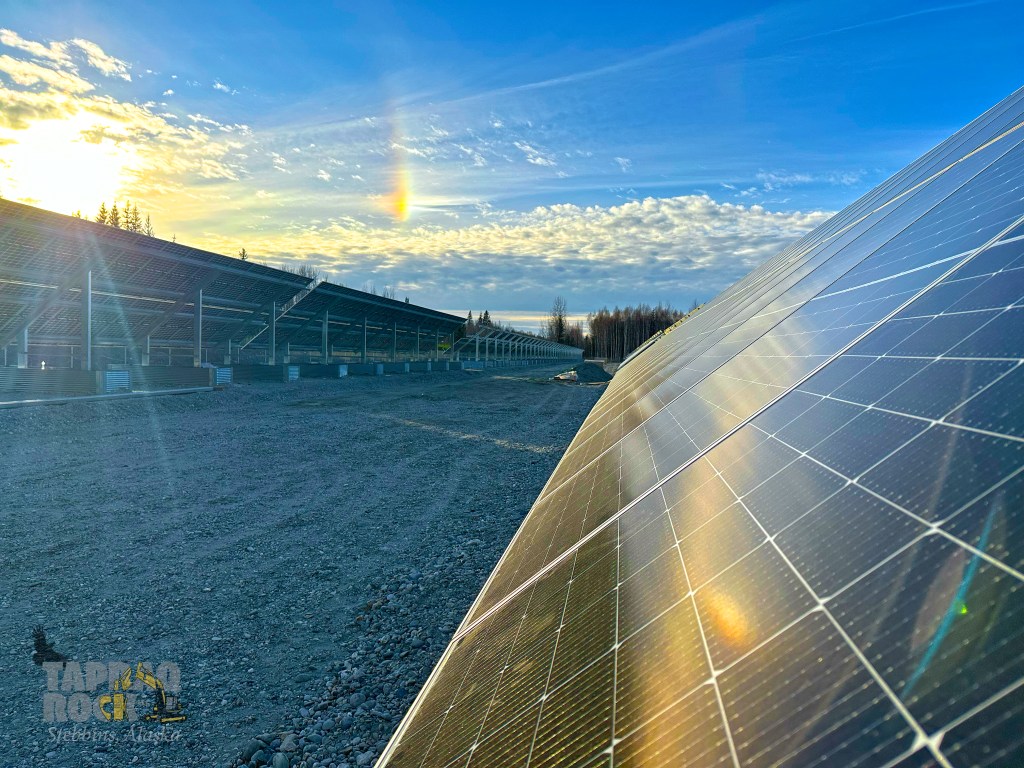
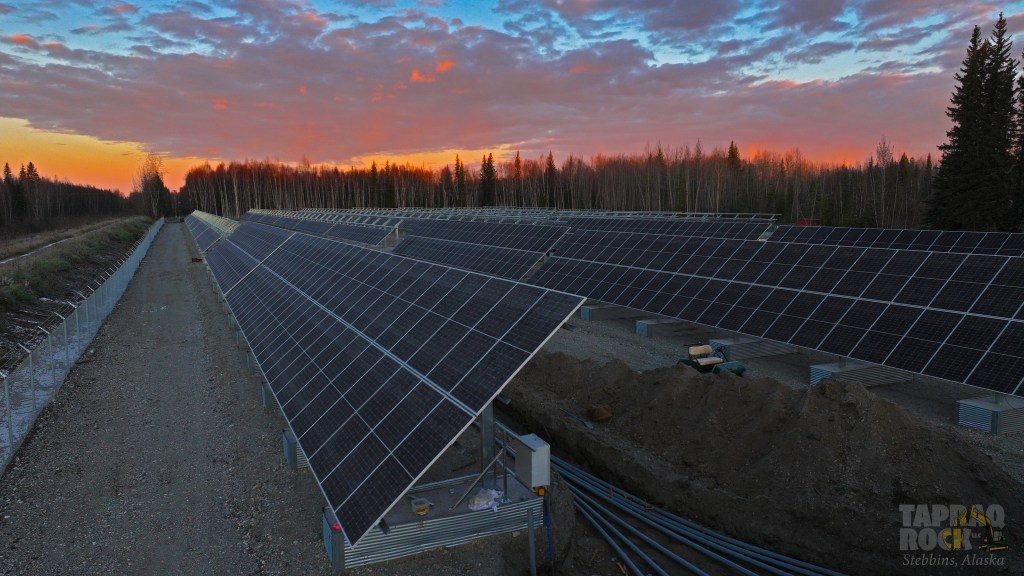
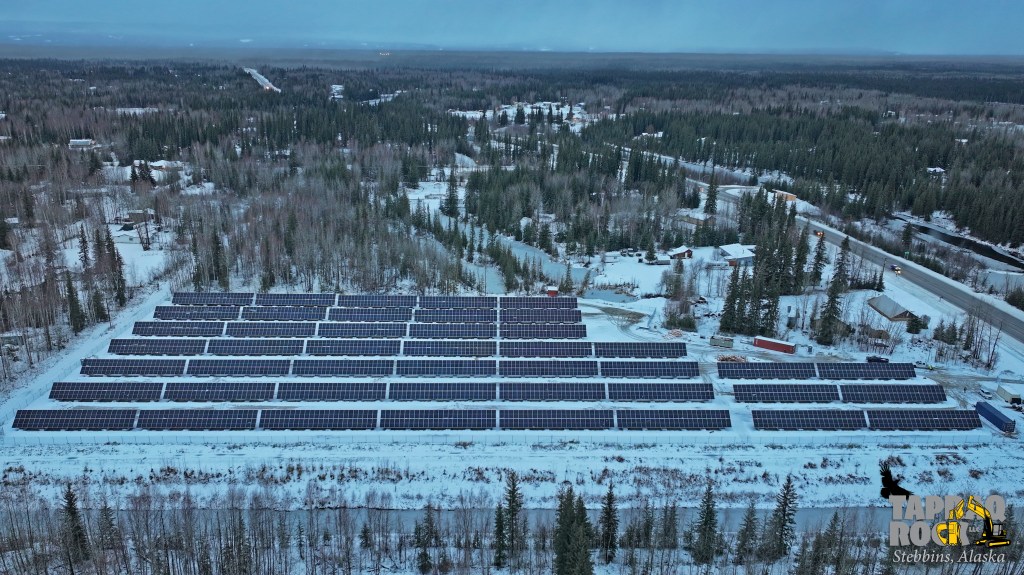
The first of these installations took place on Badger Road near North Pole, Alaska. The installation of a large-scale solar grid in this location would allow Tanana Chiefs Conference (TCC), Tapraq Rock, and Tapraq’s renewable energy subcontractor, Gensolar, to test both equipment and methods in developing a plan for remote installations.
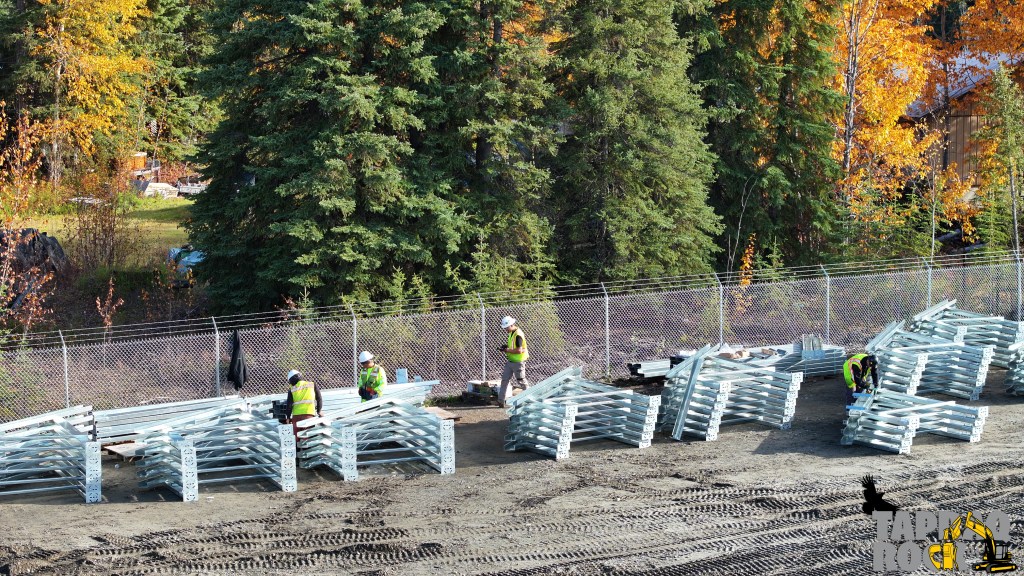
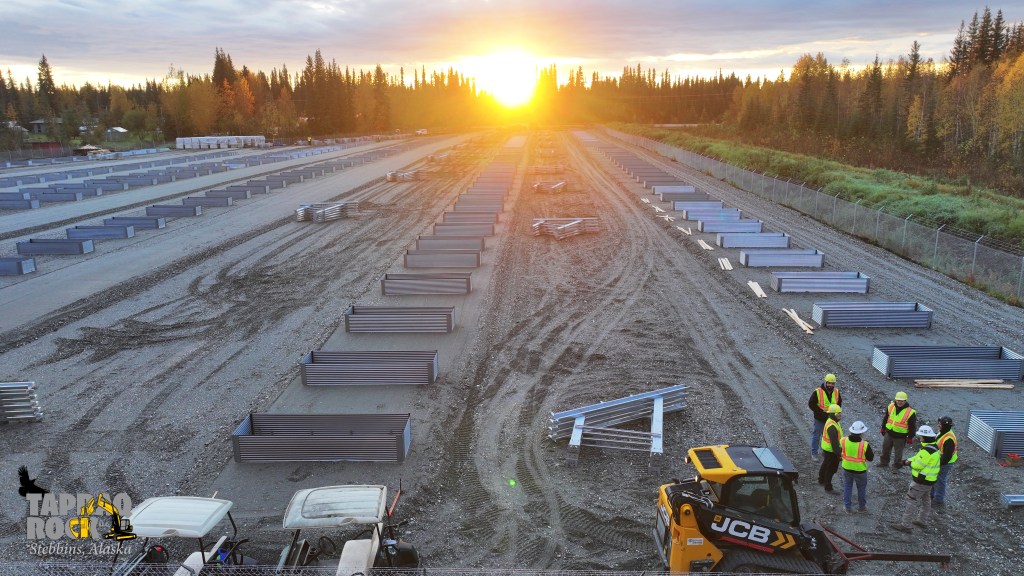
Soon a joint team was assembled on site consisting of a Tapraq project manager, foreman, and laborer; a Gensolar crew consisting of carpenters, electricians, and trade foremen, and Tanana Chiefs Conference project engineers and managers.
Typical to projects in Alaska, challenges arose immediately. TCC had been proactive in ensuring schedule could be met by choosing to supply materials and placing orders long before the project was awarded. Despite this precaution, manufacturers and suppliers fell behind schedule in manufacturing. On top of this, shipping was continually delayed. Some components were not fully compatible with others, simply due to availability within timeline constraints.
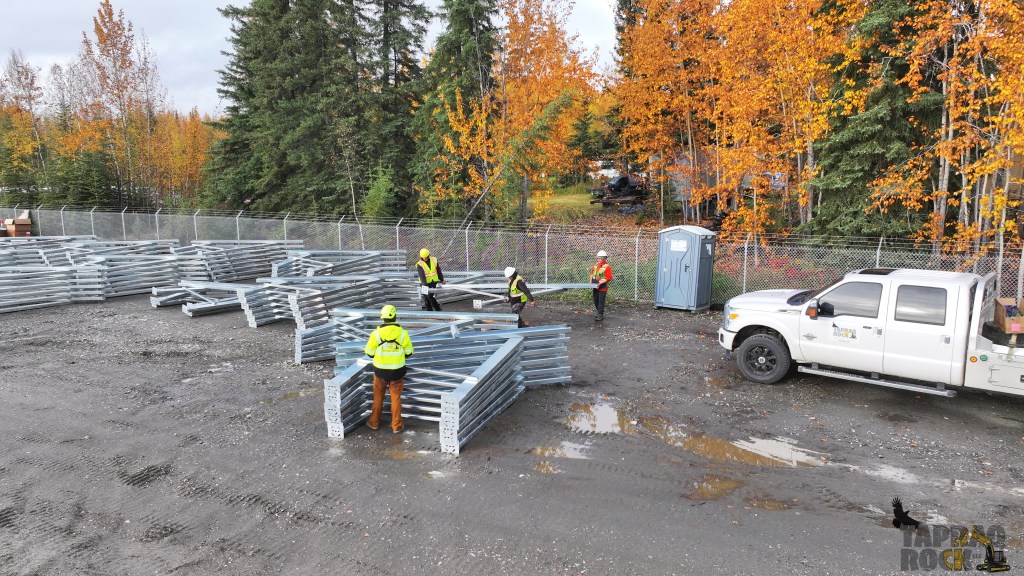
With winter looming on the horizon, the project start date was pushed out as TCC worked to motivate suppliers to get all the parts produced and on site.
Tapraq and Gensolar met to create a plan that would allow progress to start with the materials on hand in order to advance some progress as soon as possible. With a plan in hand, they approached TCC and proposed to start construction.
At this point, the project had all the potential to become a disaster. Unknown to any of the three parties, promised delivery dates would soon prove to be unreliable. If construction had been delayed until components were delivered, winter would have arrived in earnest before construction could start. But with all three parties working together for a common goal, progress was made.
TCC’s responsiveness to creative solutions on the one hand and their proactive drive to push manufacturers, suppliers, and shippers in Canada and the Lower-48 on the other hand was key to allowing the project to progress. TCC also took an active role in providing ideas and support in solving unexpected challenges throughout the project.
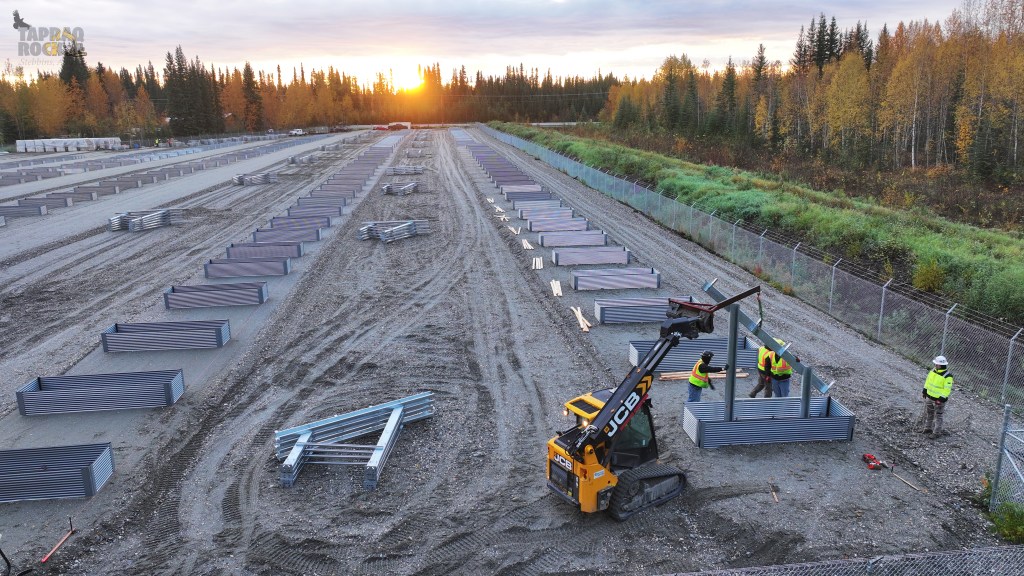
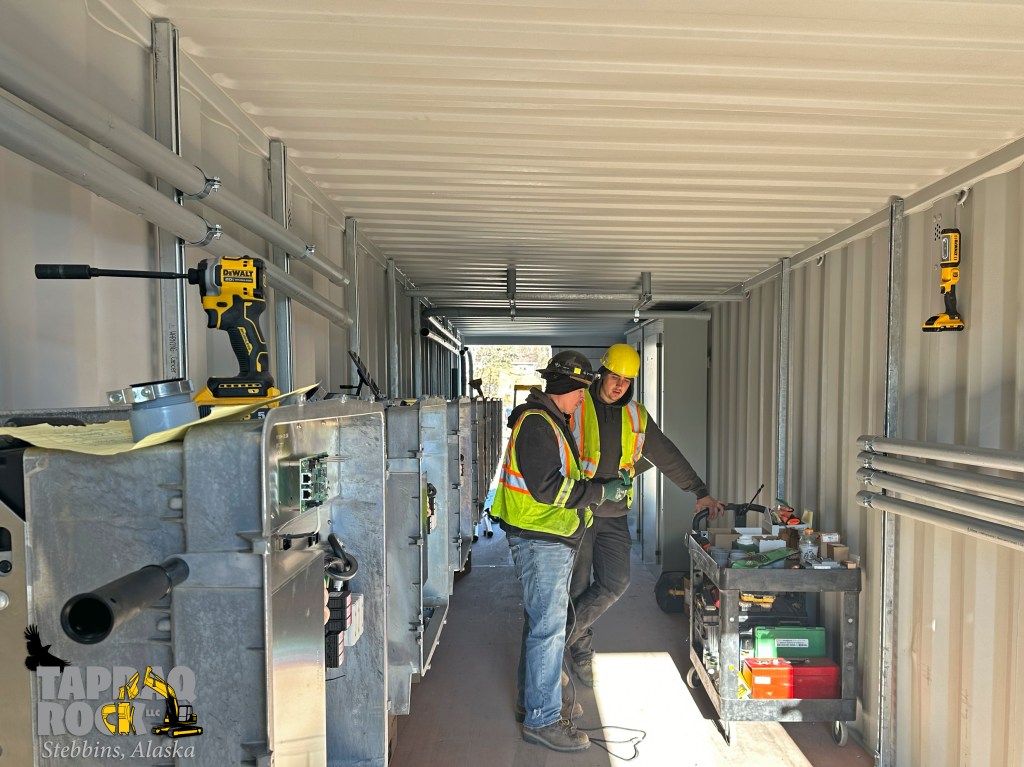
Gensolar’s electricians found ways to assemble components on hand as much as possible while prepping for components that were still en route. Other solutions were sourced locally.
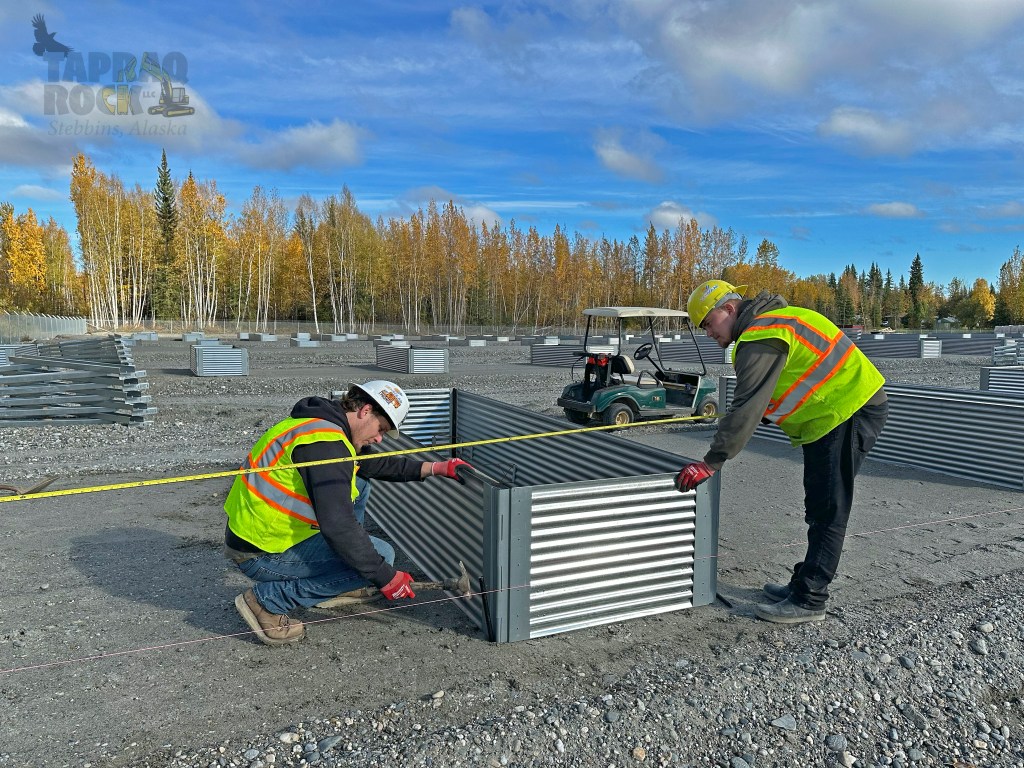
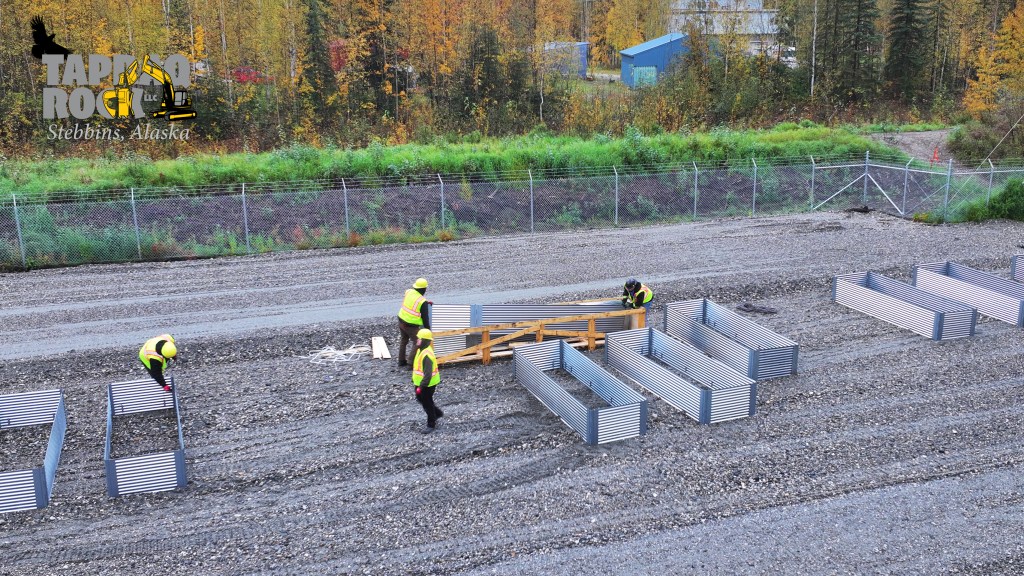
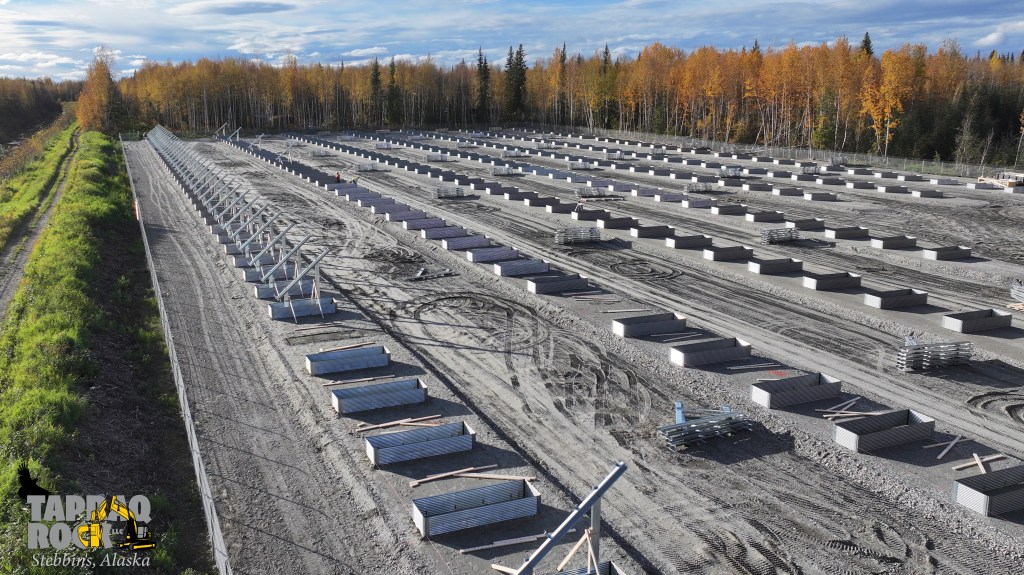
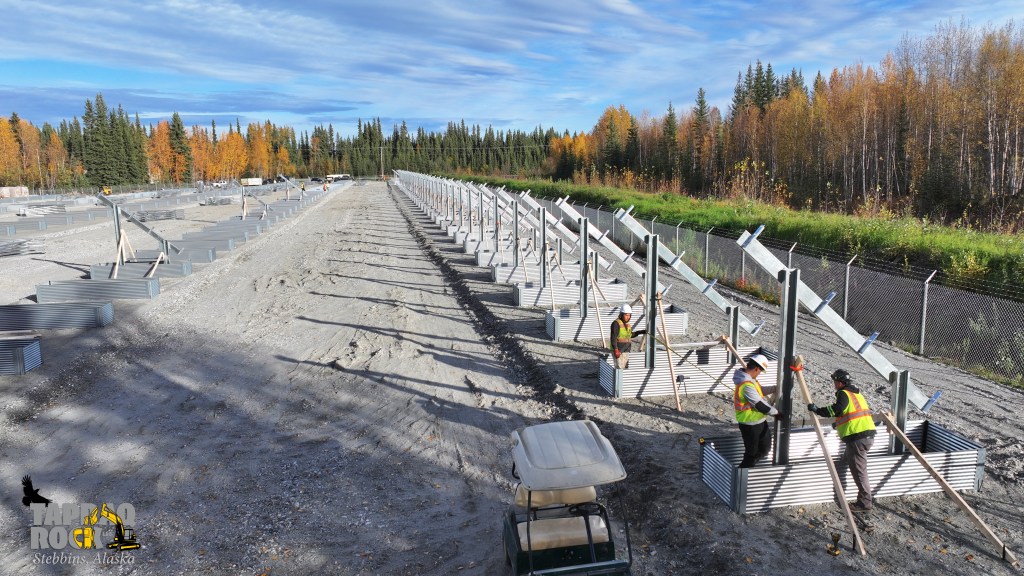
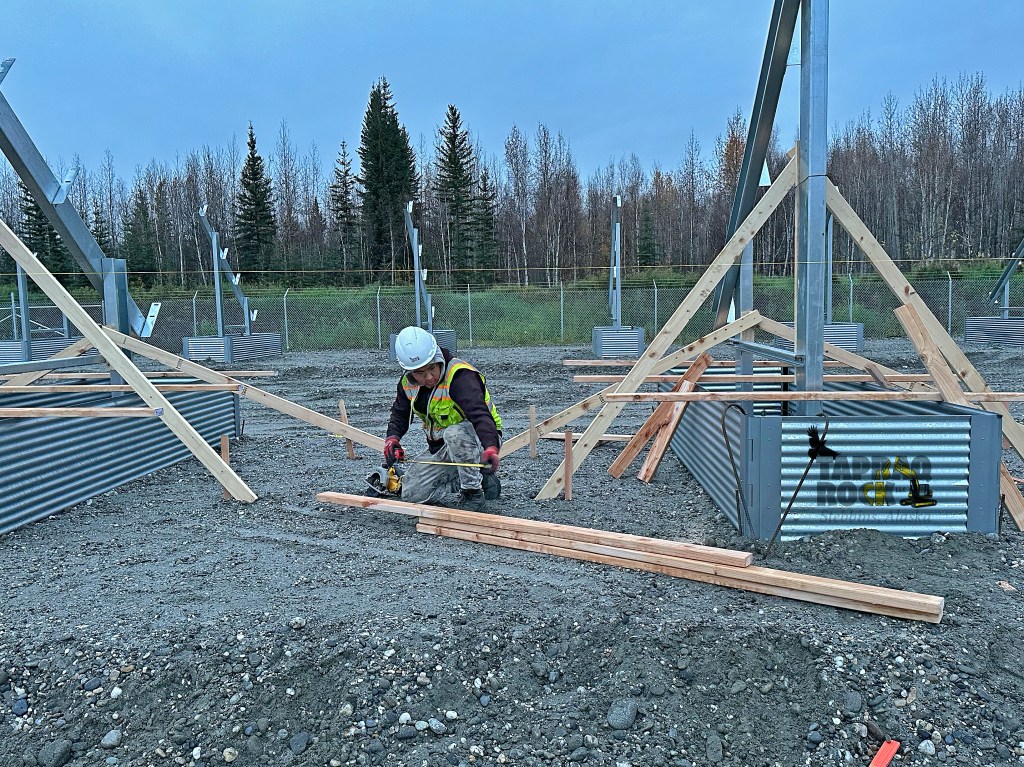
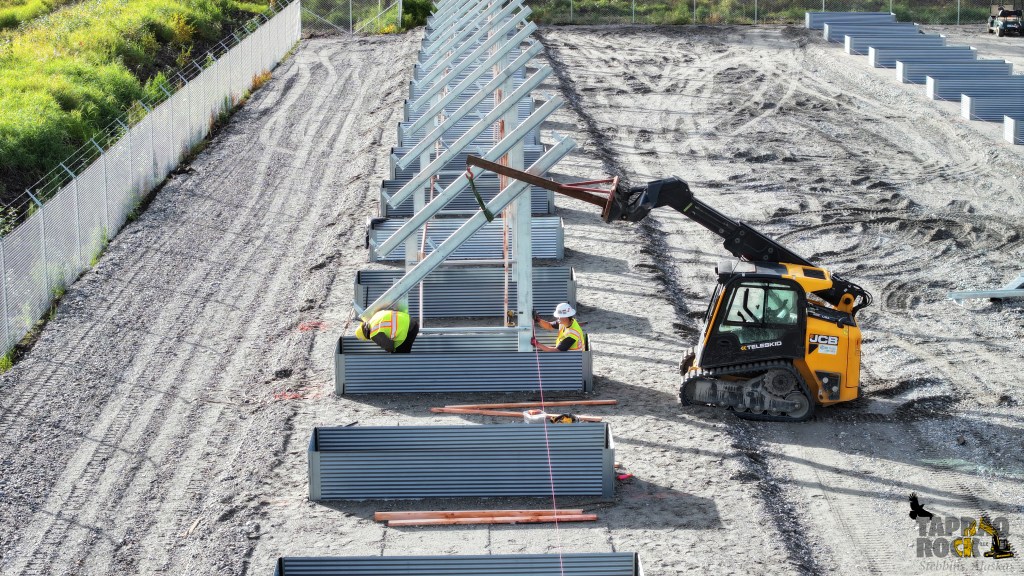
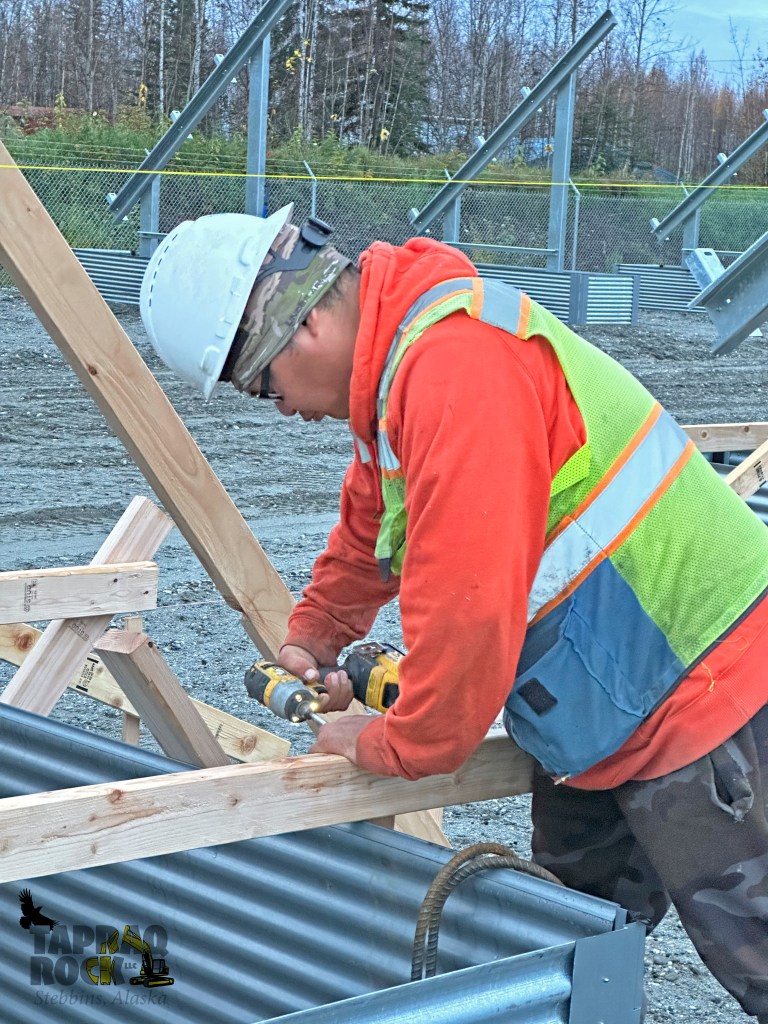
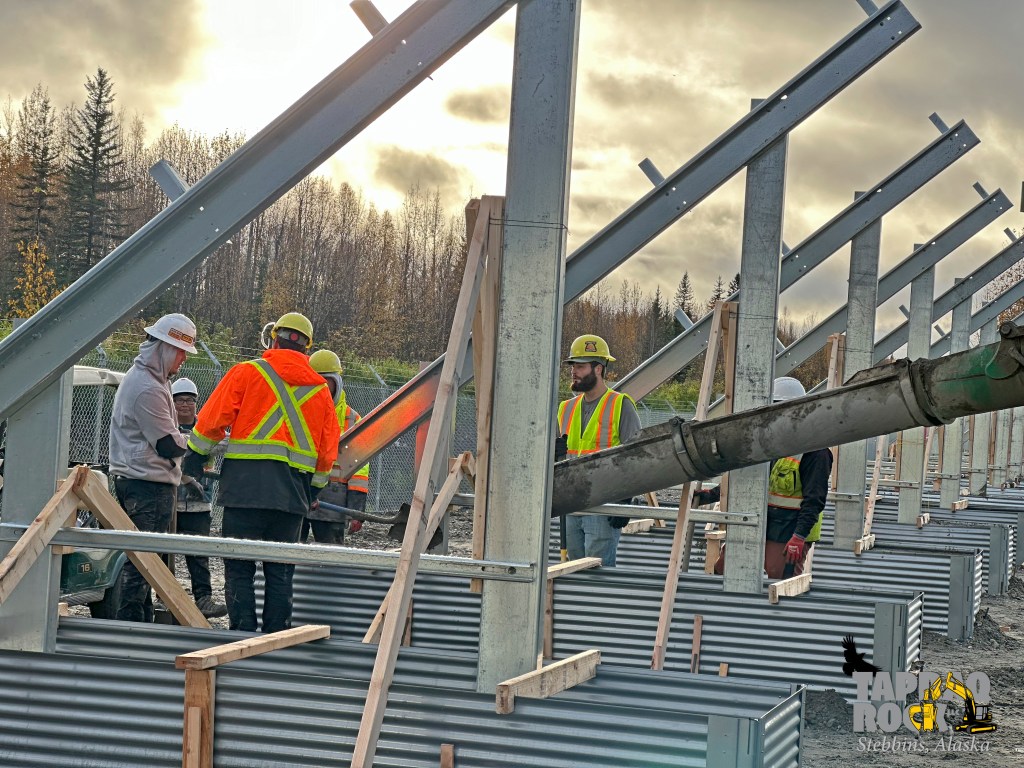
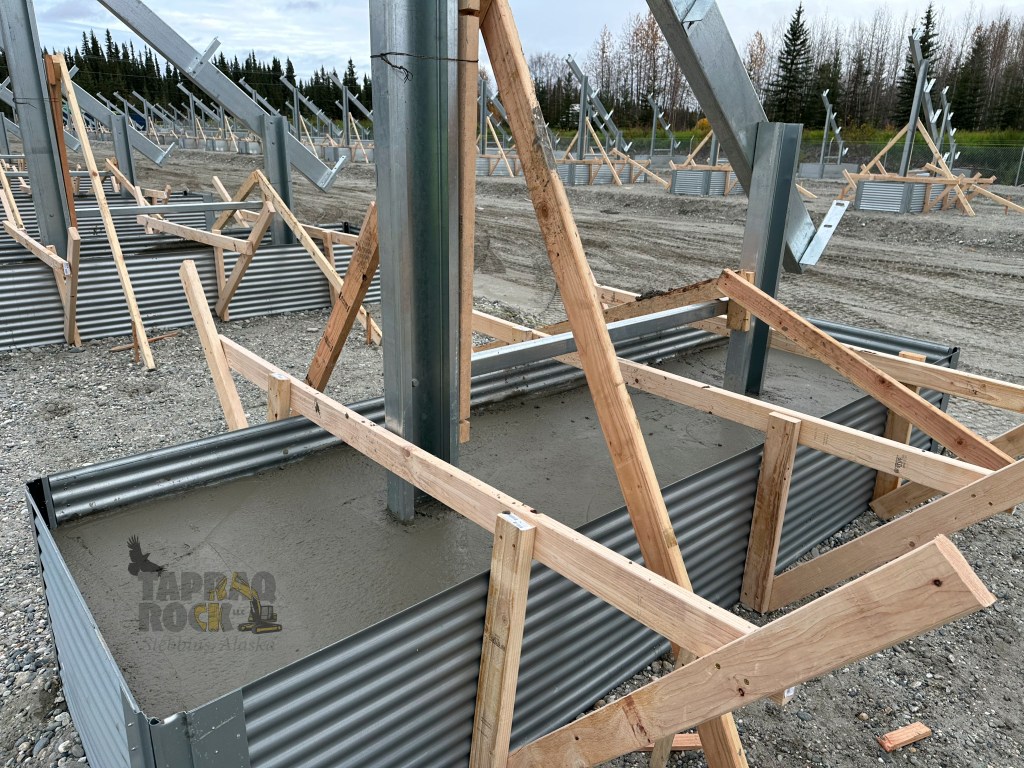
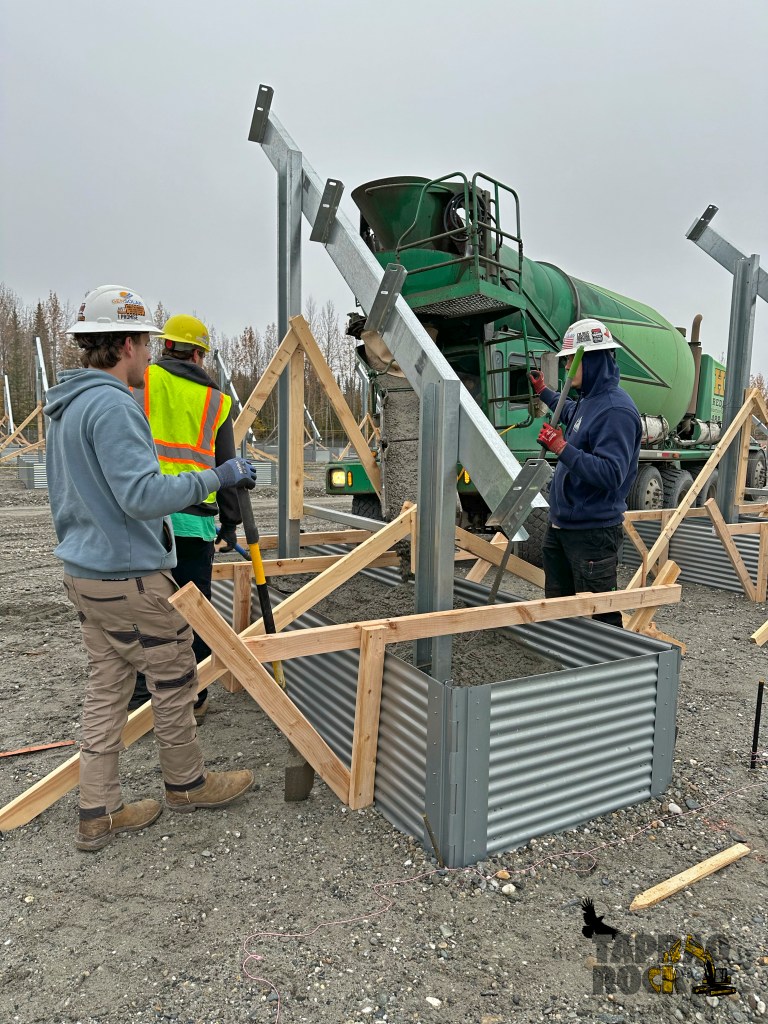
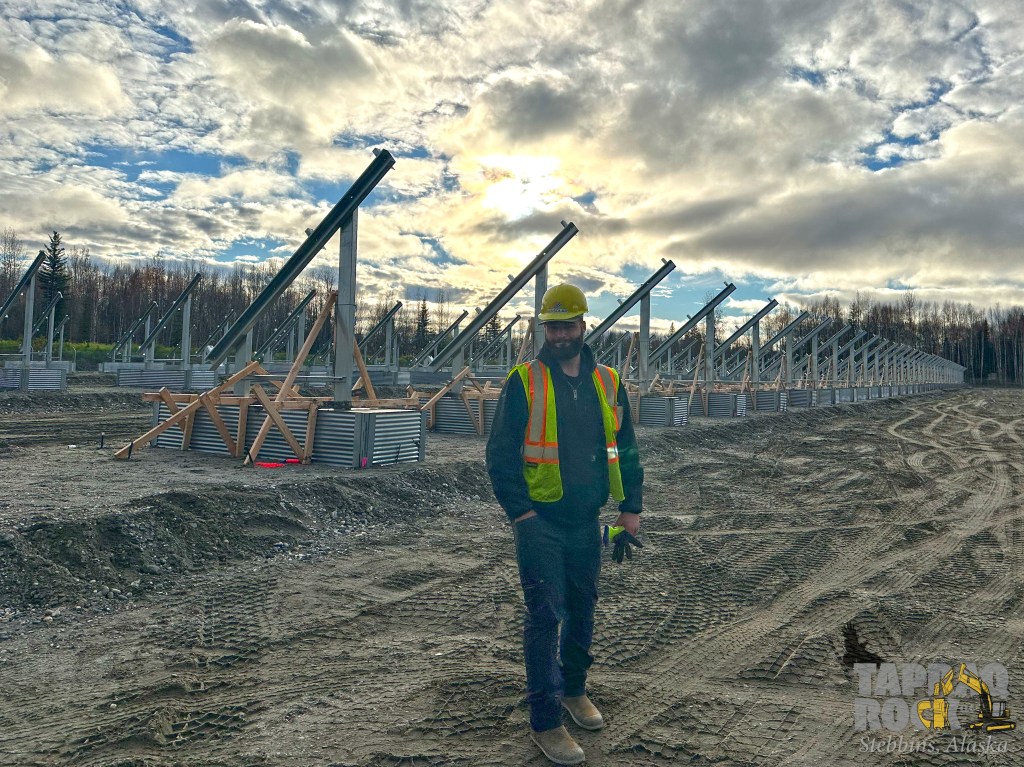
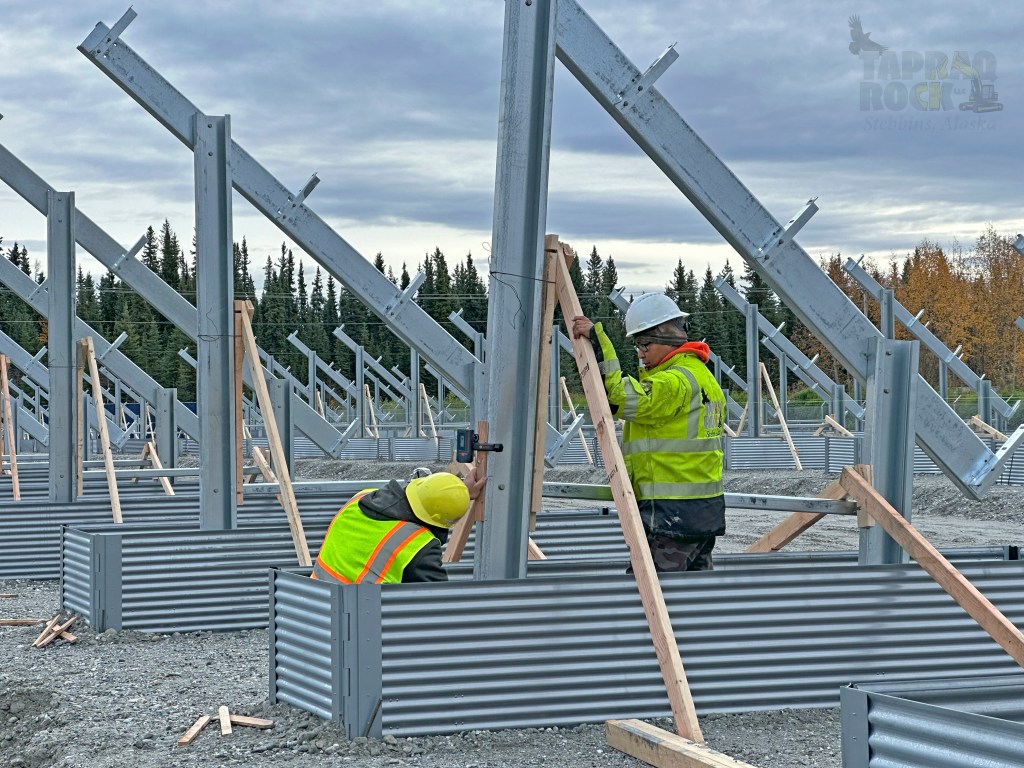
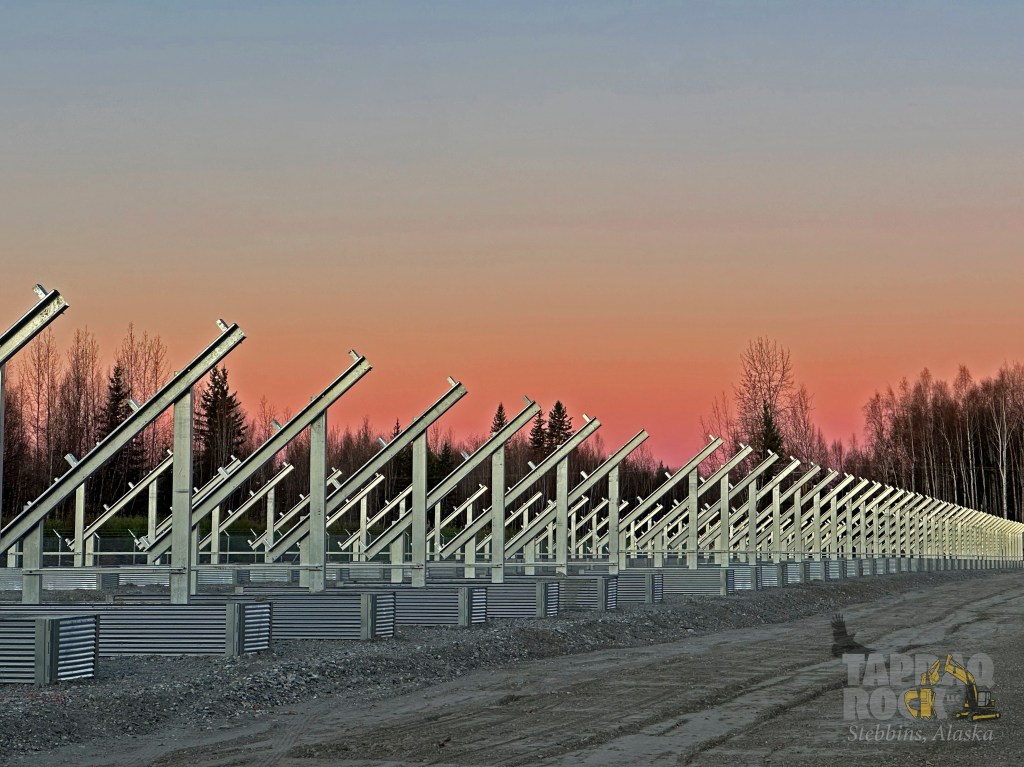
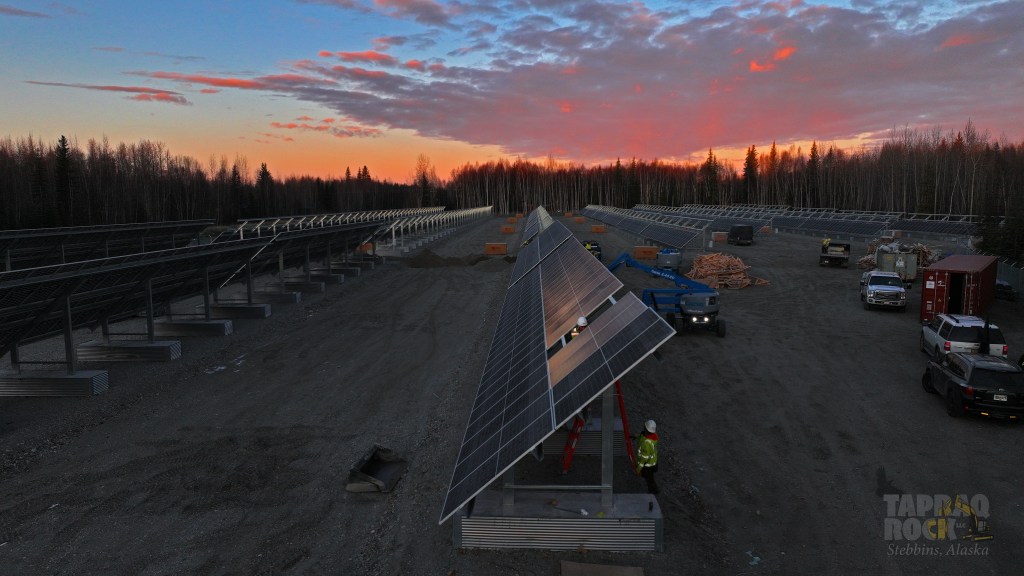
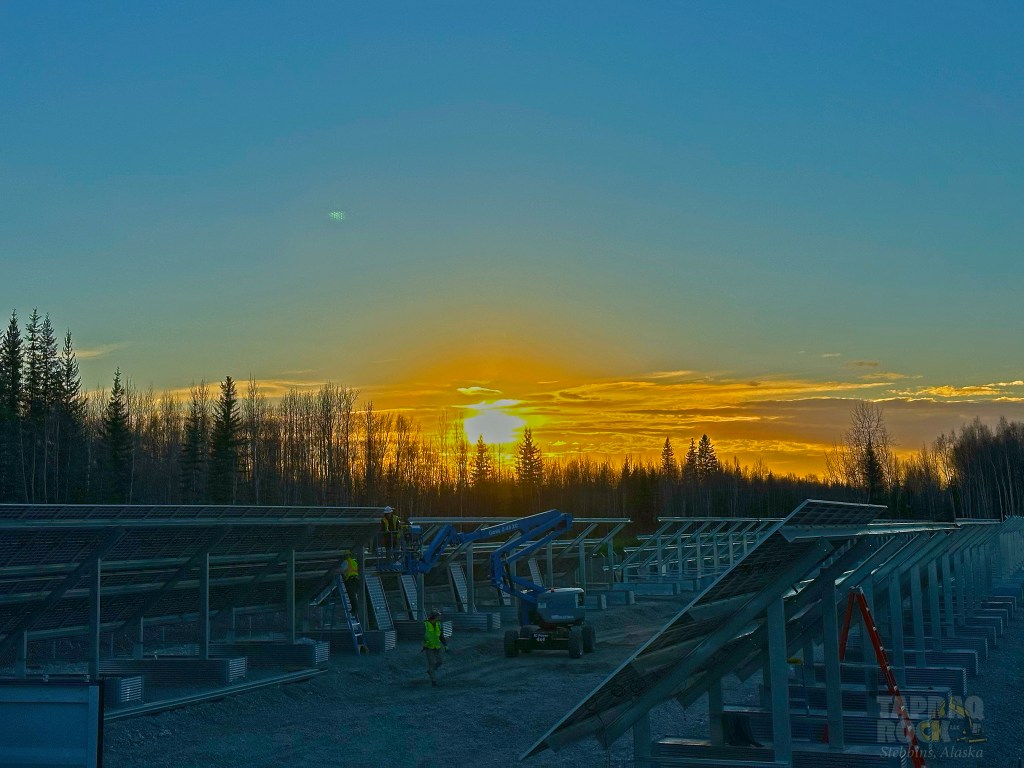
Tapraq’s and Gensolar’s combined construction crew built the A-Frame support structures, and then built bracing to hold each one in place for a concrete pour. Some structural components not even manufactured yet, beyond the promised delivery date. Yet the concrete work could not be delayed due to the approach of winter. Unable to construct the entire frame structures prior to pouring, the crew purchased truckloads of lumber and built bracing for each leg to hold them in position for a concrete pour. Survey, measuring, spacing, and leveling of each support frame had to be absolutely exact so that pre-drilled holes would line up and final construction of the framework could take place when the missing steel beams arrived. Tapraq was informed in a conversation with the framework manufacturer that if the concrete was poured before the complete construction of the framework, it would be impossible to align and assemble the components. With this discouraging information in hand, the difficult decision was made to forge ahead and pour the ballast anyway, because the alternative was a major delay, quite probably into the next year.
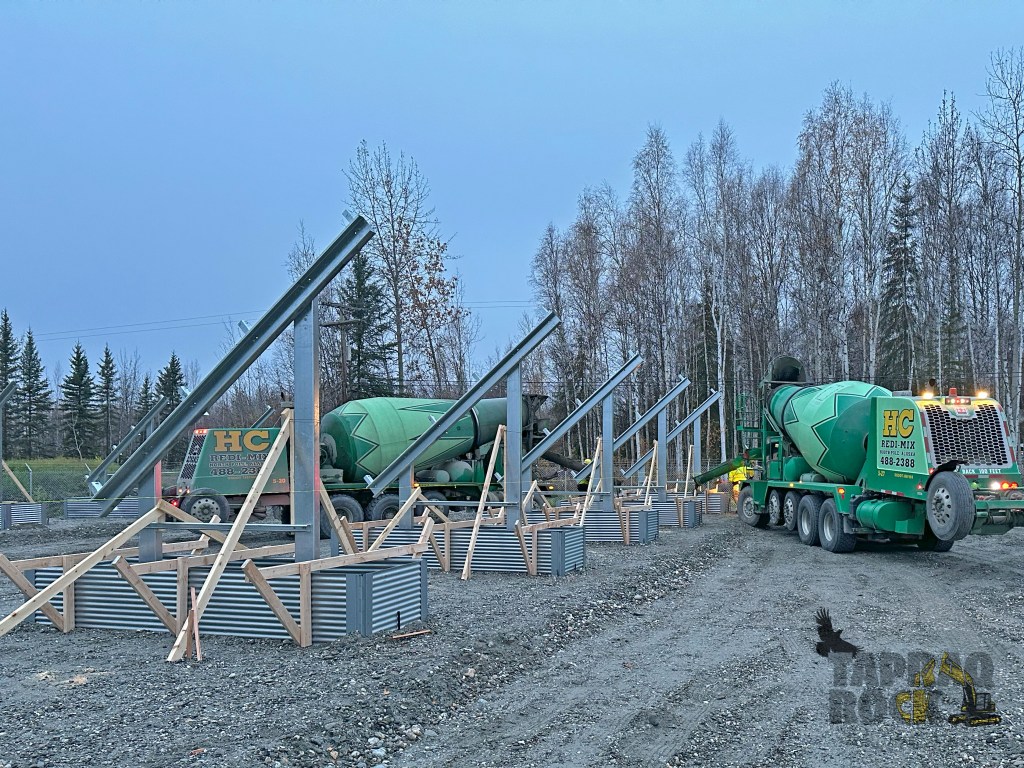
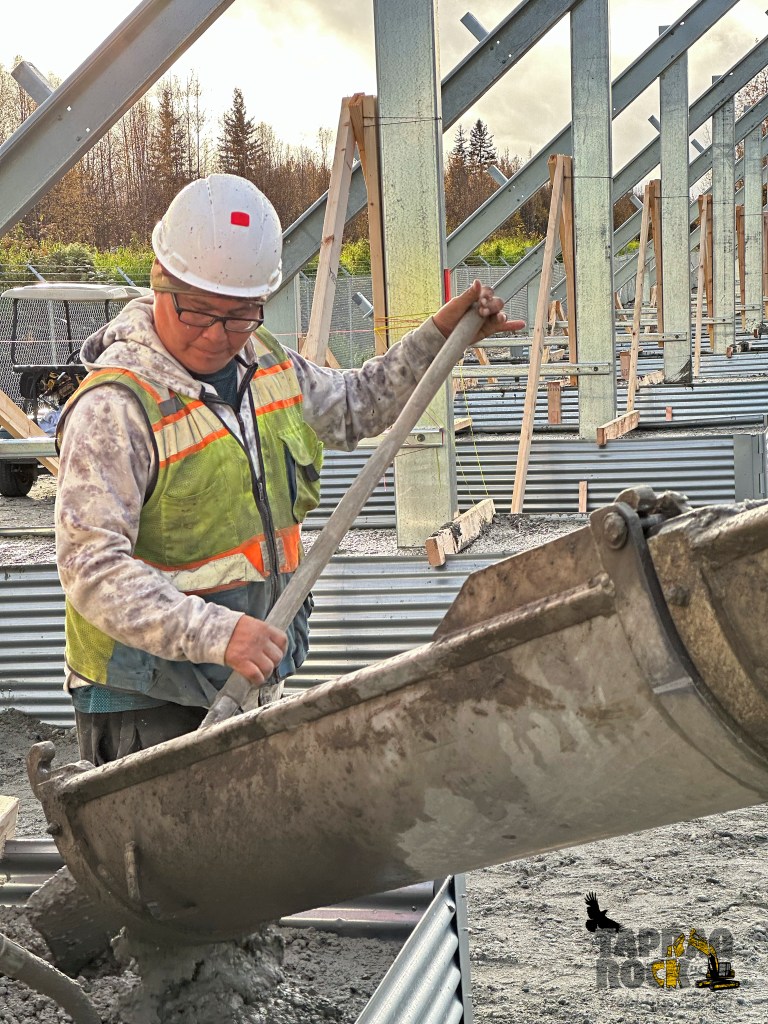
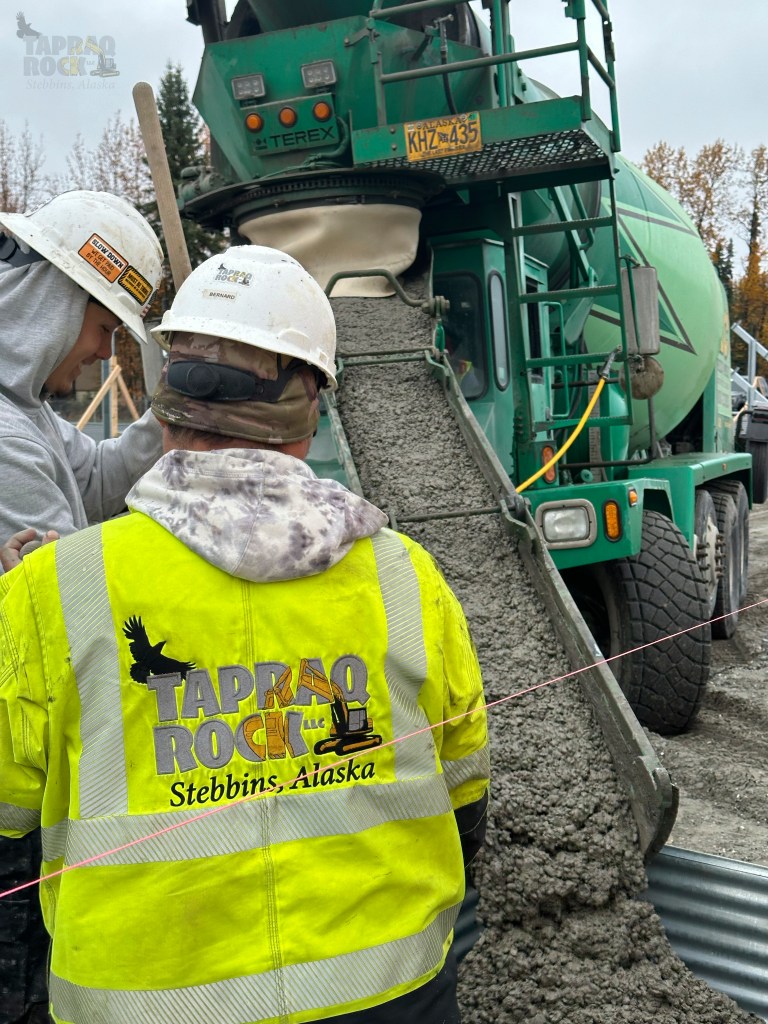
After surveying, measuring, leveling, and bracing each leg, the crew called in the trucks and began pouring concrete. The slightest error would prevent the final structure from aligning, making assembly impossible without extensive modifications.
But promised delivery date after date for the framework components came and went, and no trucks arrived, so the crew continued with painstaking measuring, leveling, bracing, pouring.
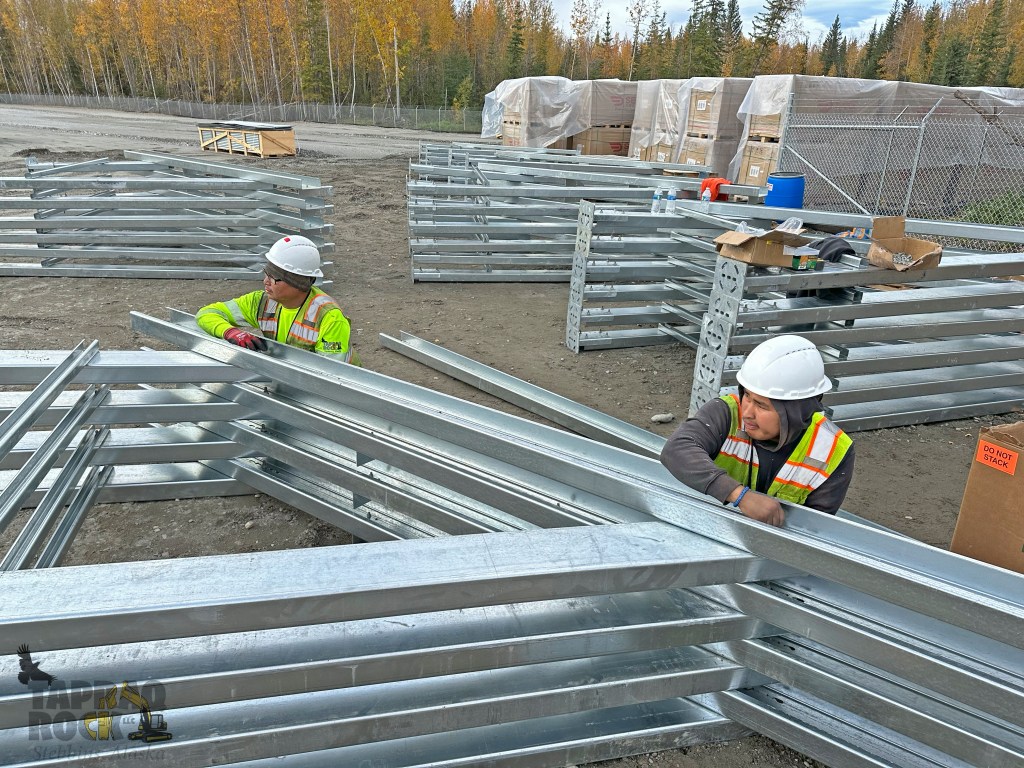
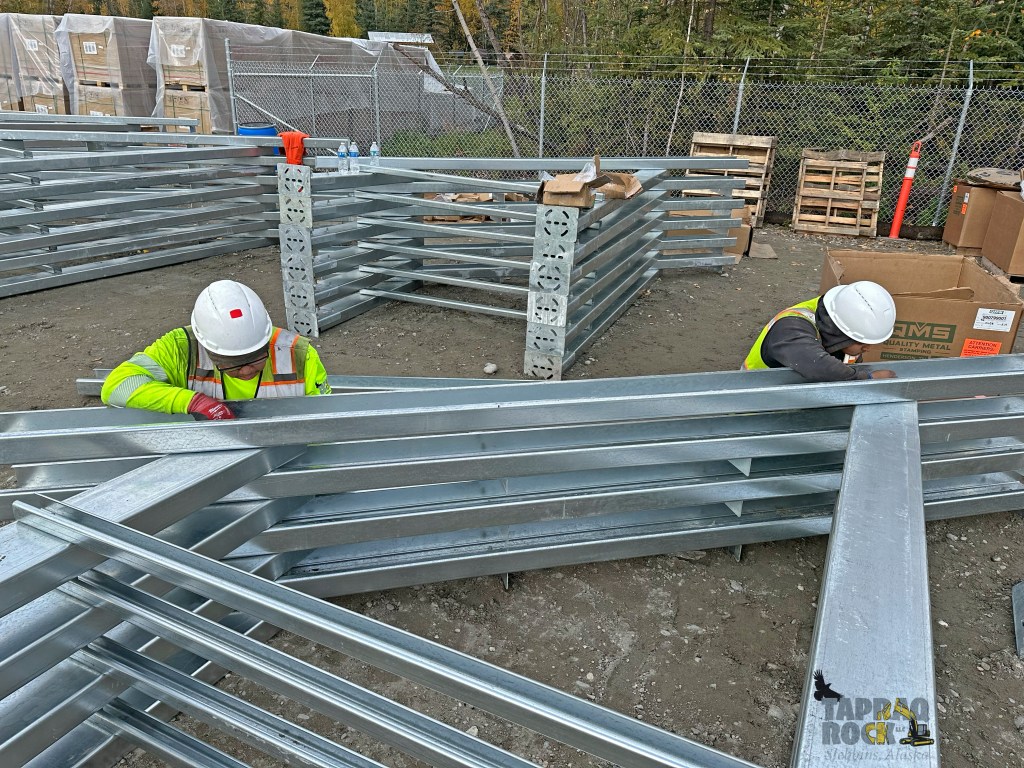
When the truck loads of steel beams finally arrived, 540 steel legs were permanently and immovably set in concrete, waiting for 630 steel beams and brackets, with 28,800 holes that had to align perfectly for successful construction.
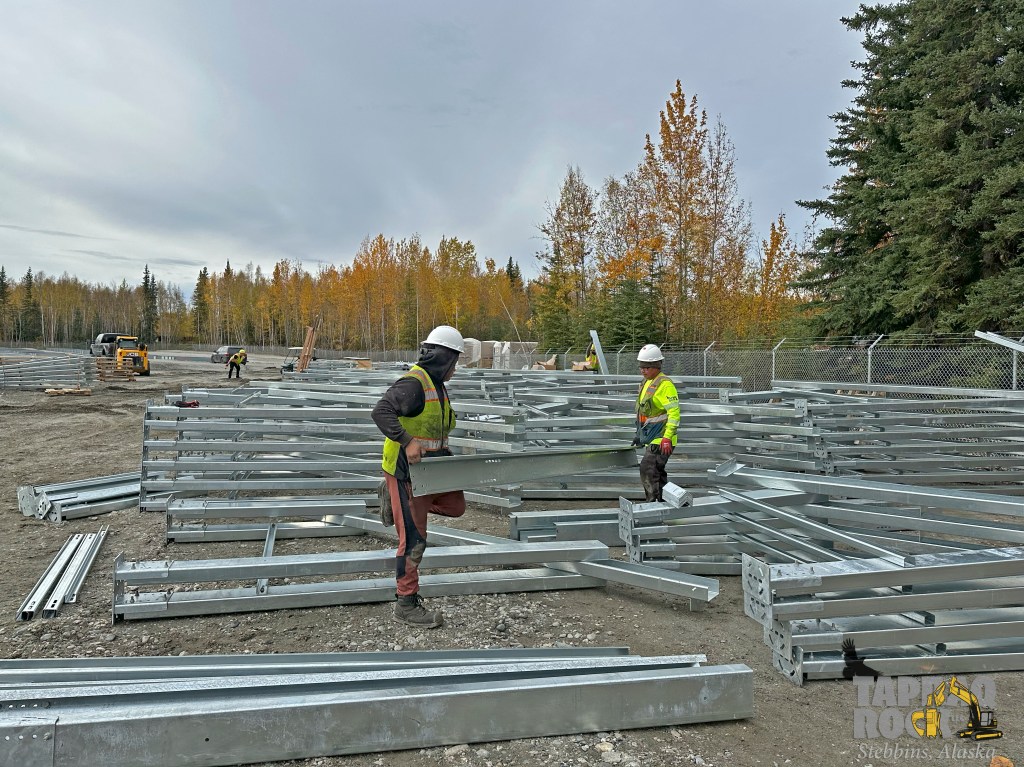
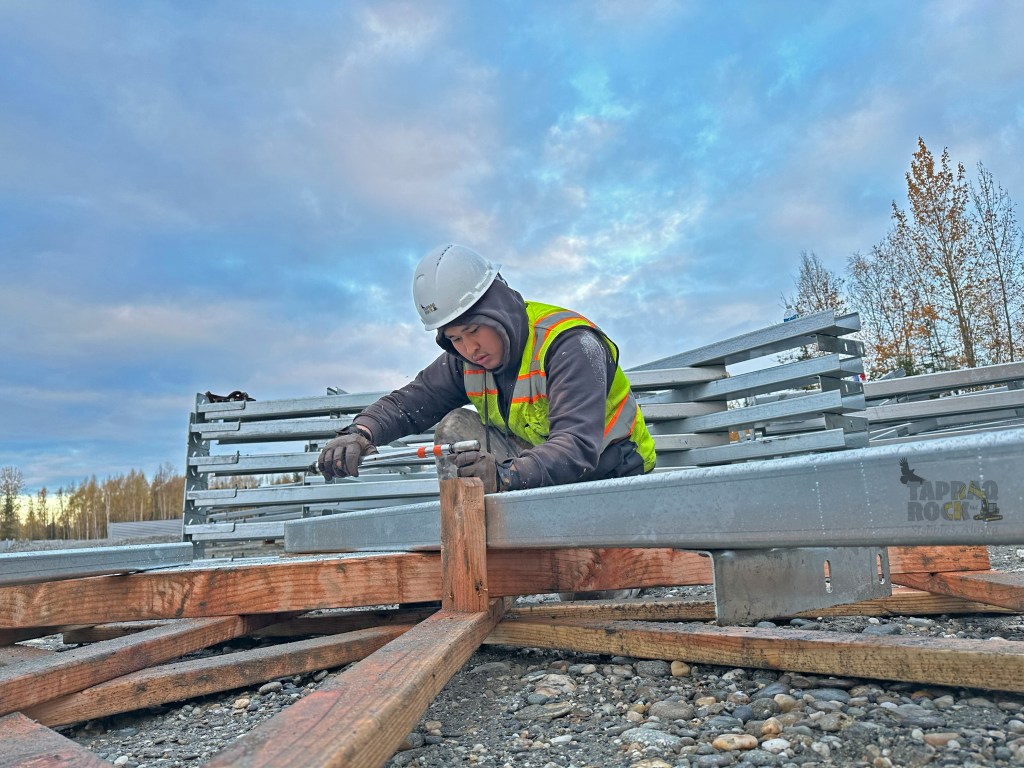
The crew began assembling beams. Would they align? 28,800 holes aligned perfectly and 14,400 bolts, nuts, and washers of various sizes were installed and torqued.
The joint crew had performed the impossible.
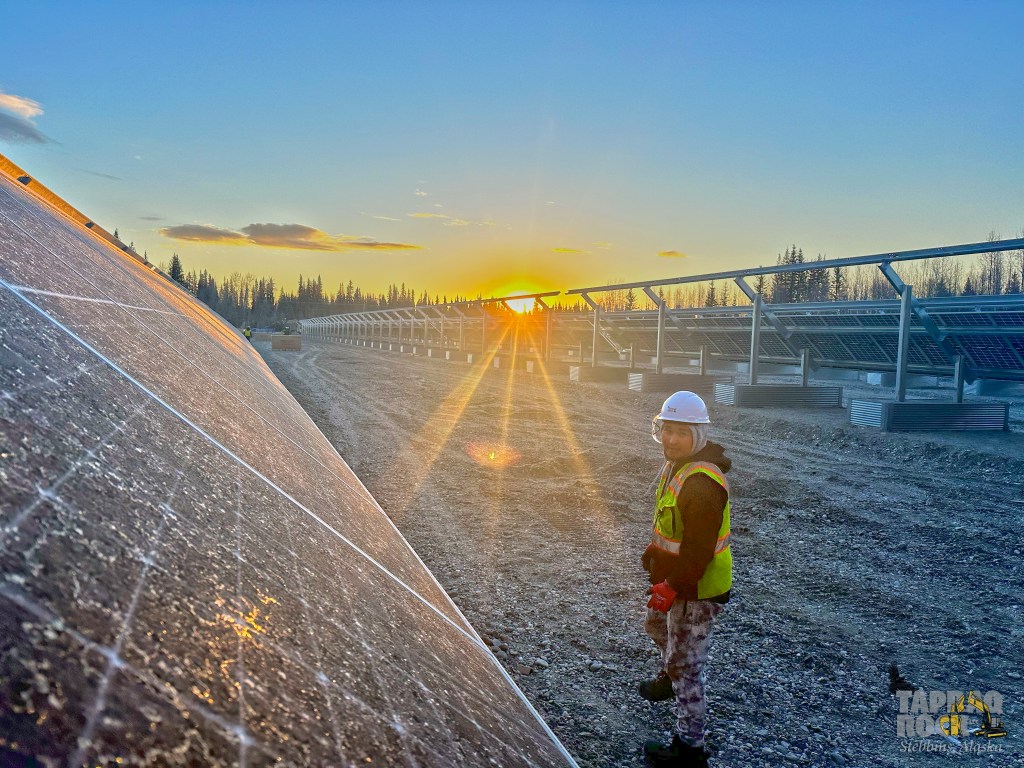
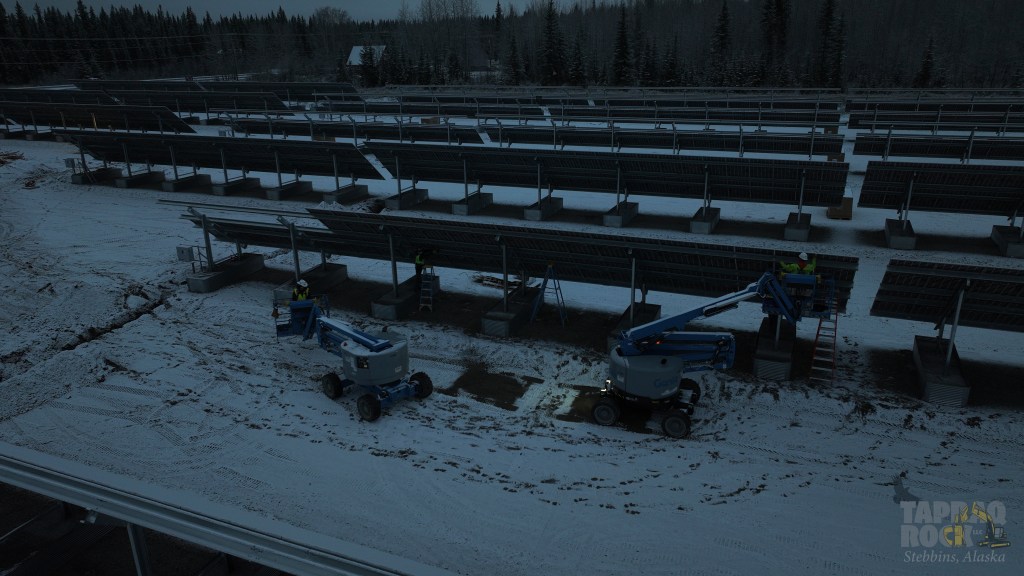
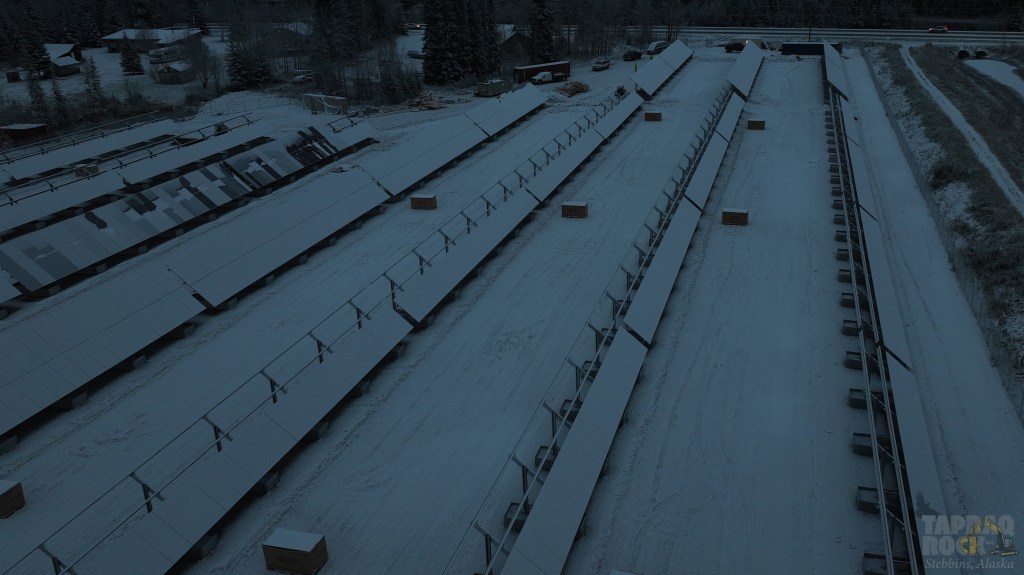
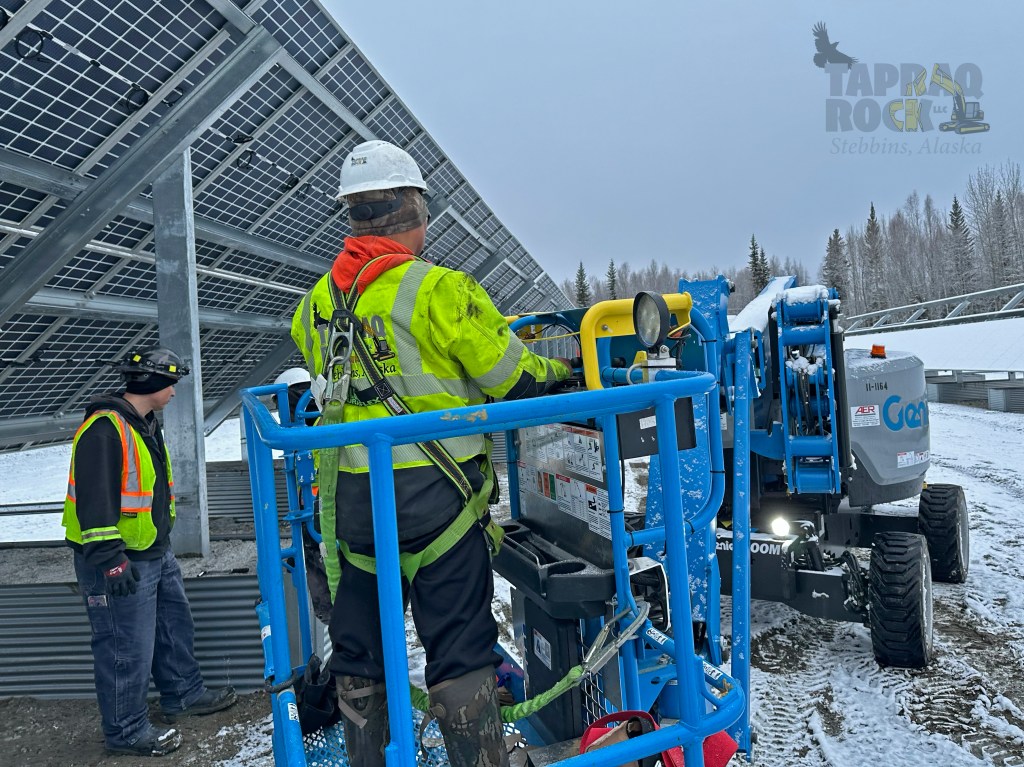
The delays in receiving components and extra days required to construct components out of order pushed the project into snow and freezing rain. Gloves had to come off to to handle hardware for construction of the support structure and installation of the solar panels.
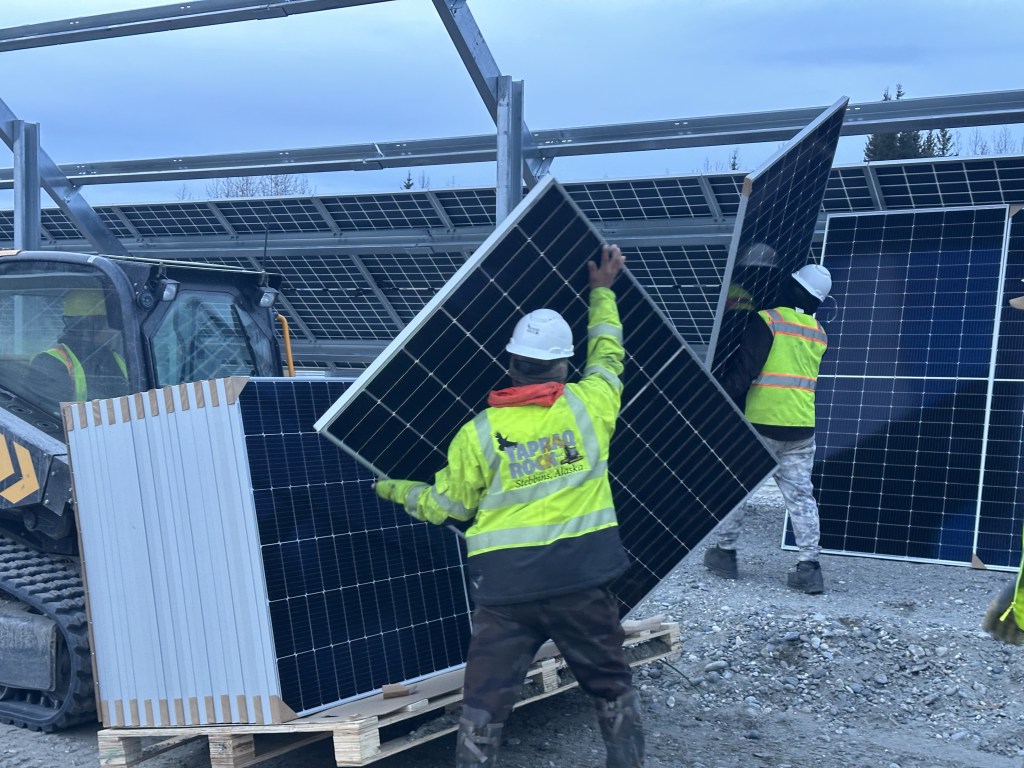
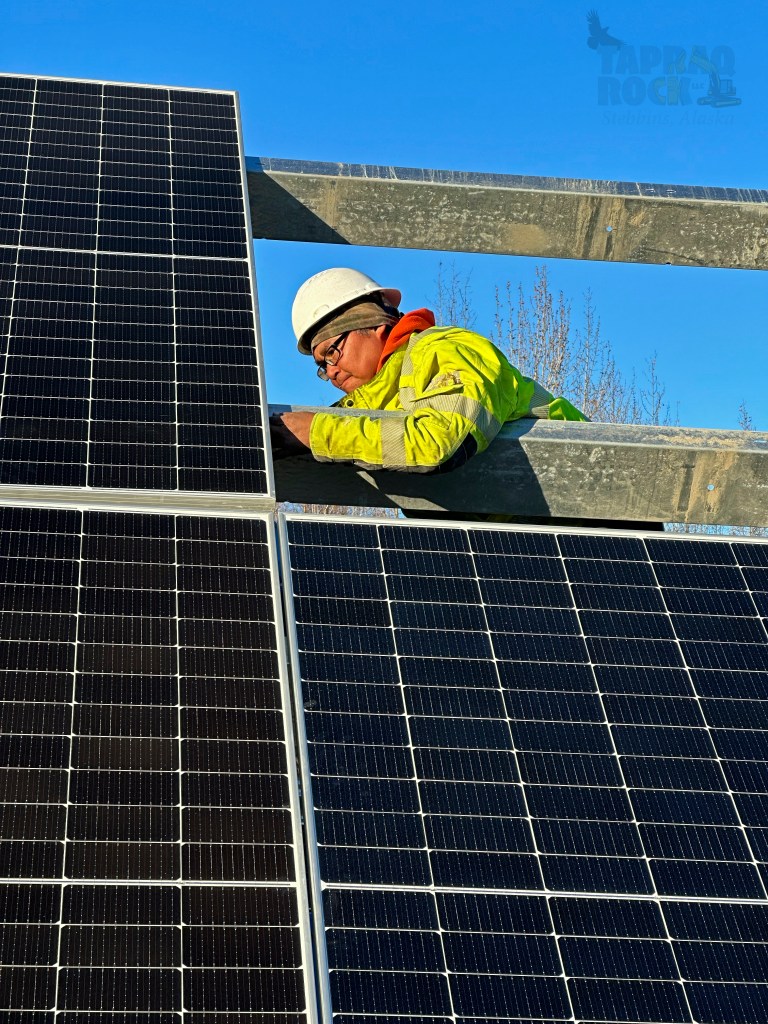
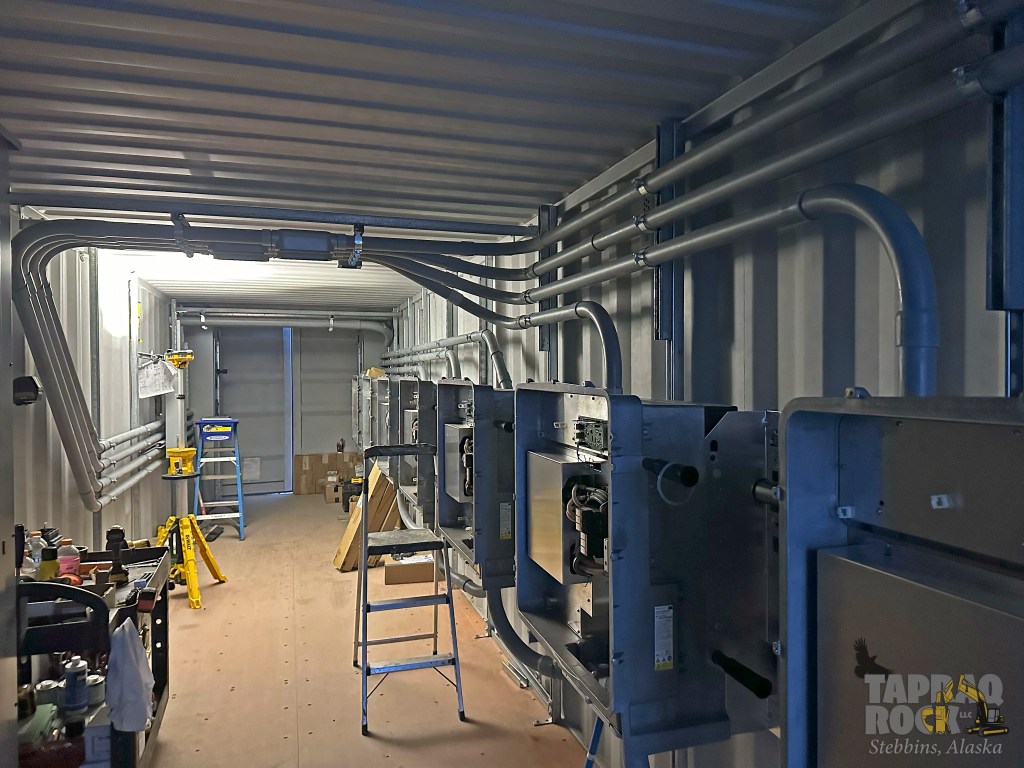
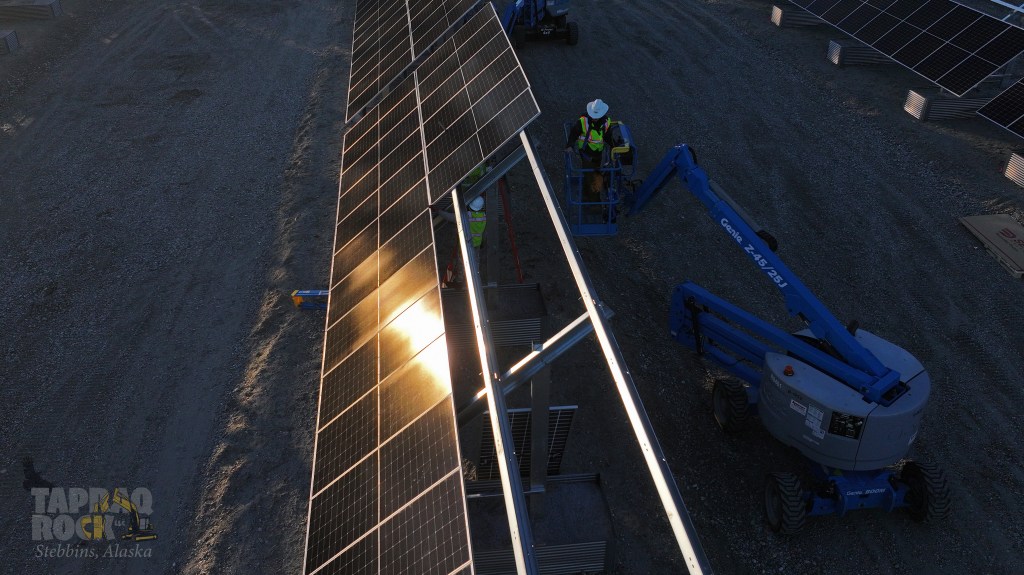
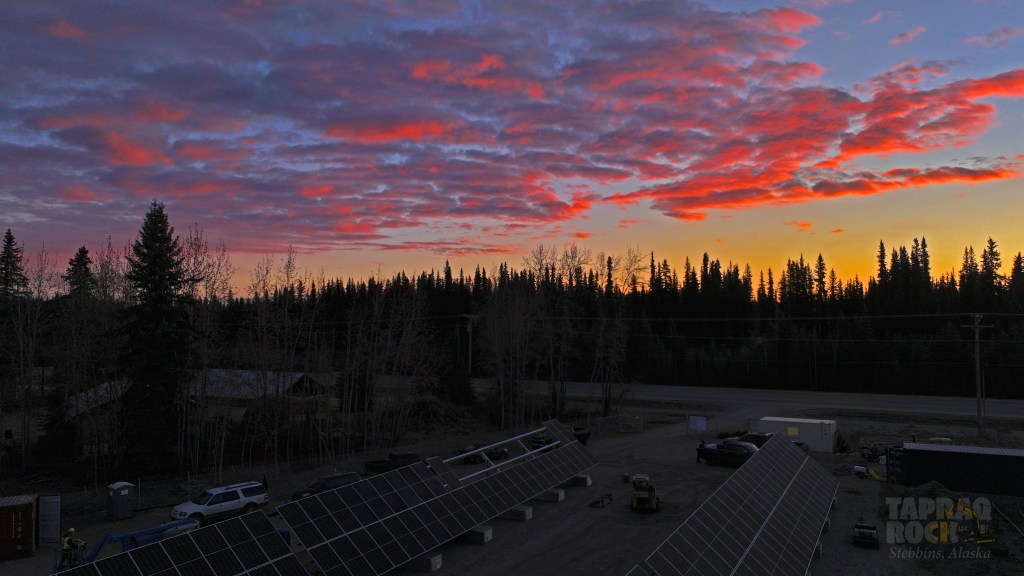
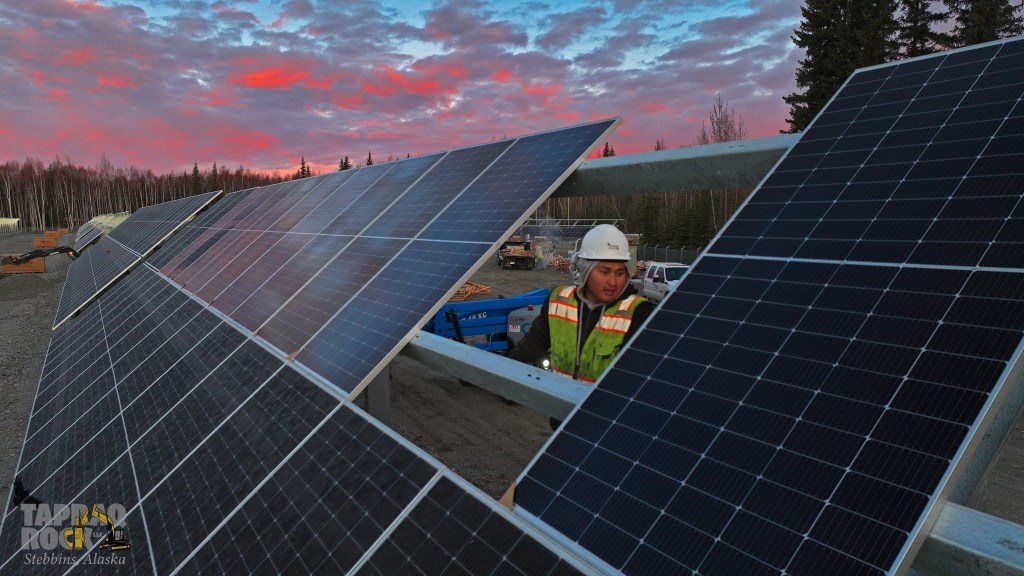
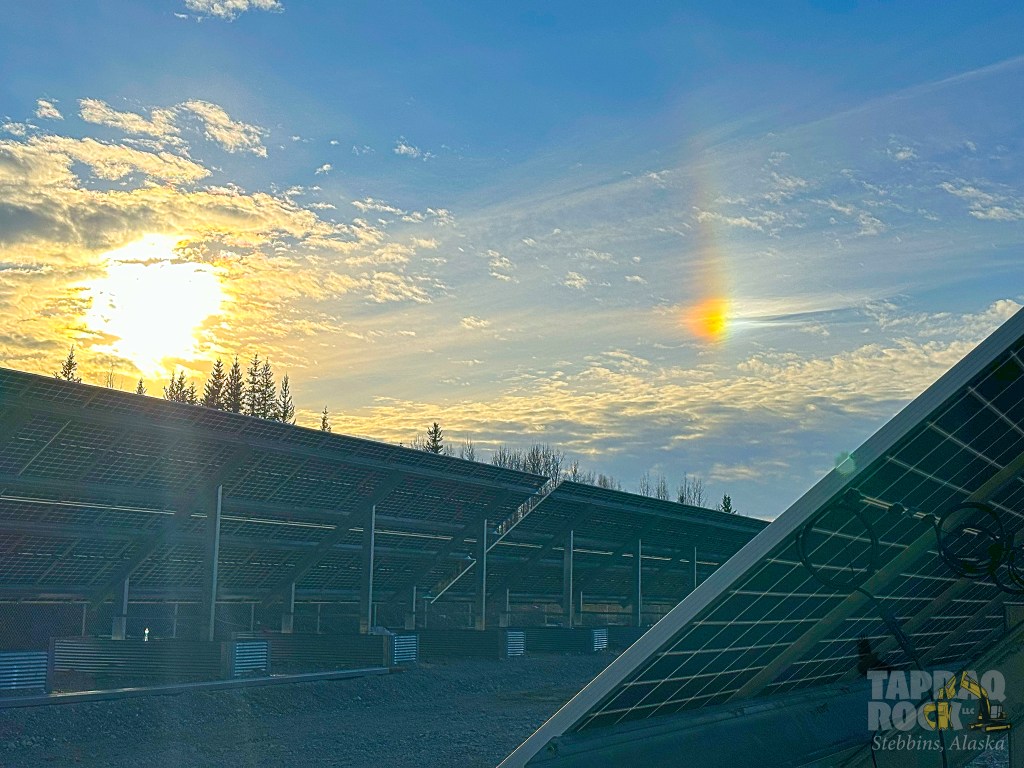
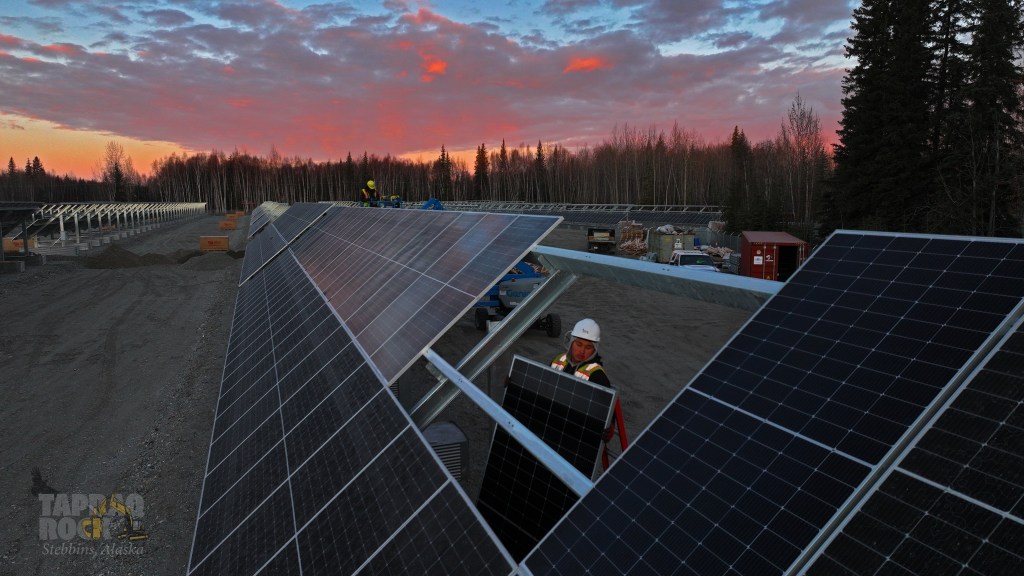
The construction crew installed solar panels while the electrical crew ran wiring, tied in the solar grid, electrical panels, and transformer, and worked with GVEA to tie into the power grid.
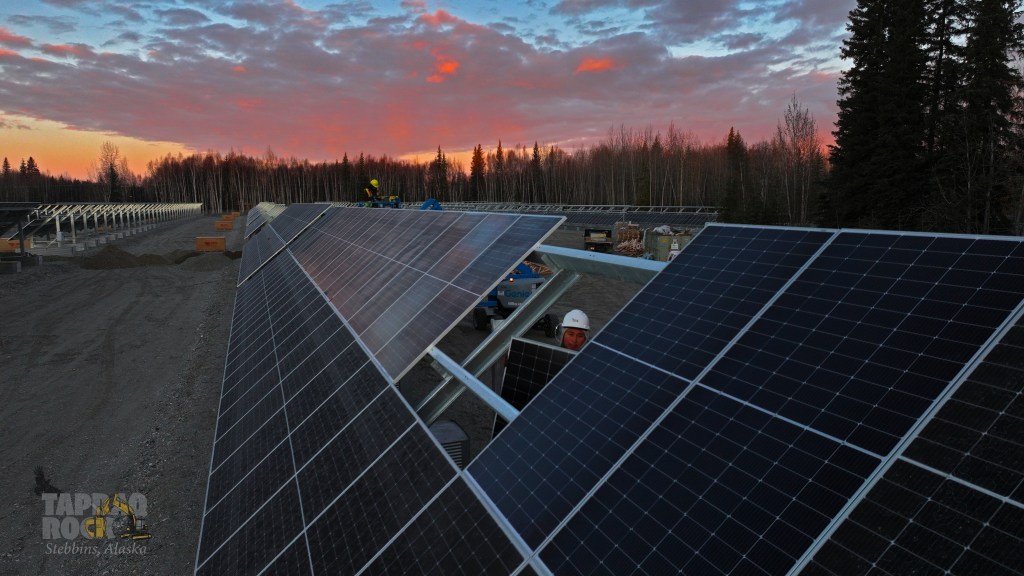
Working together, Tanana Chiefs Conference, Tapraq Rock, and Gensolar overcame all obstacles to complete the first project in a series of solar grid installations that will be an important step toward solving rural Alaska’s energy crisis. Tapraq Rock and Gensolar are now in a better position than ever to assist TCC in this goal.
The Tanana Chiefs Conference, working with a goal of improving life in rural native communities, mirrors Tapraq’s own focus on bringing industry and improvement to native communities and people. We enjoyed working together with TCC toward a common goal.
Gensolar demonstrated why they are leaders in the alternative energy industry with a display of expertise, work ethic, and integrity.
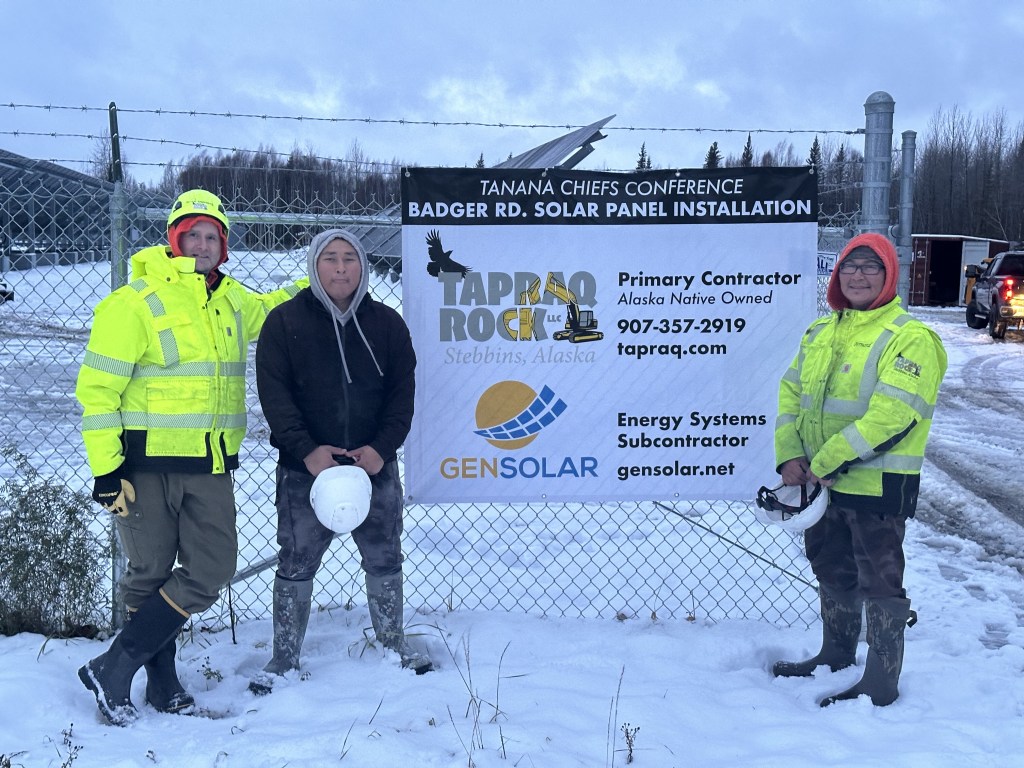
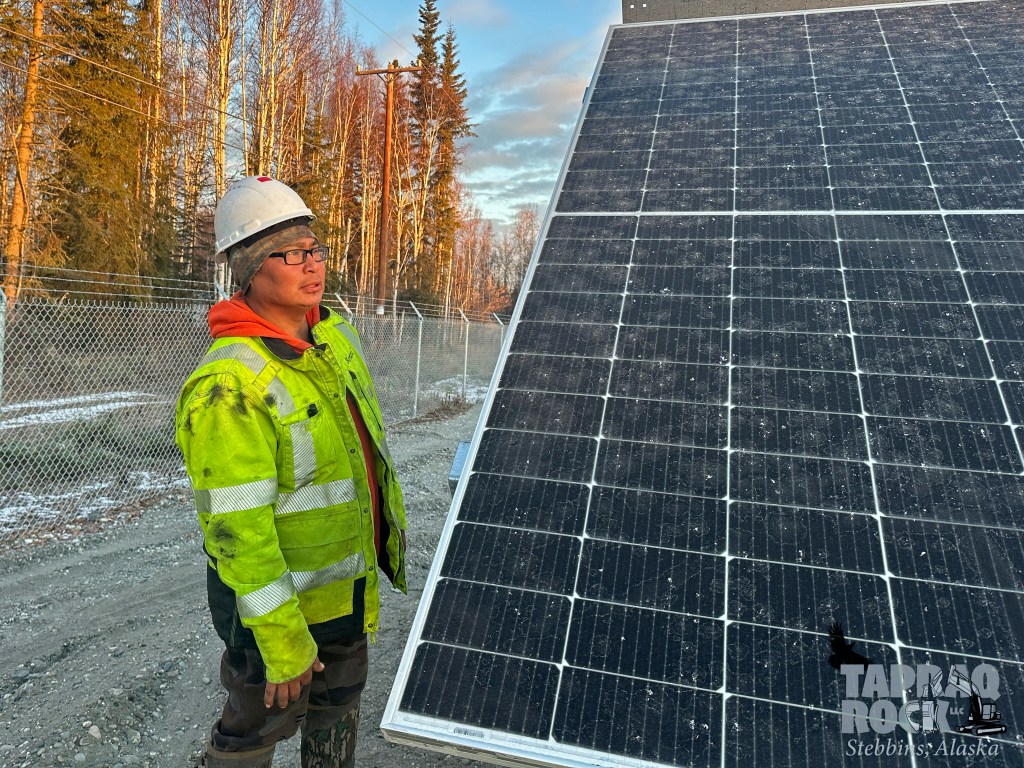
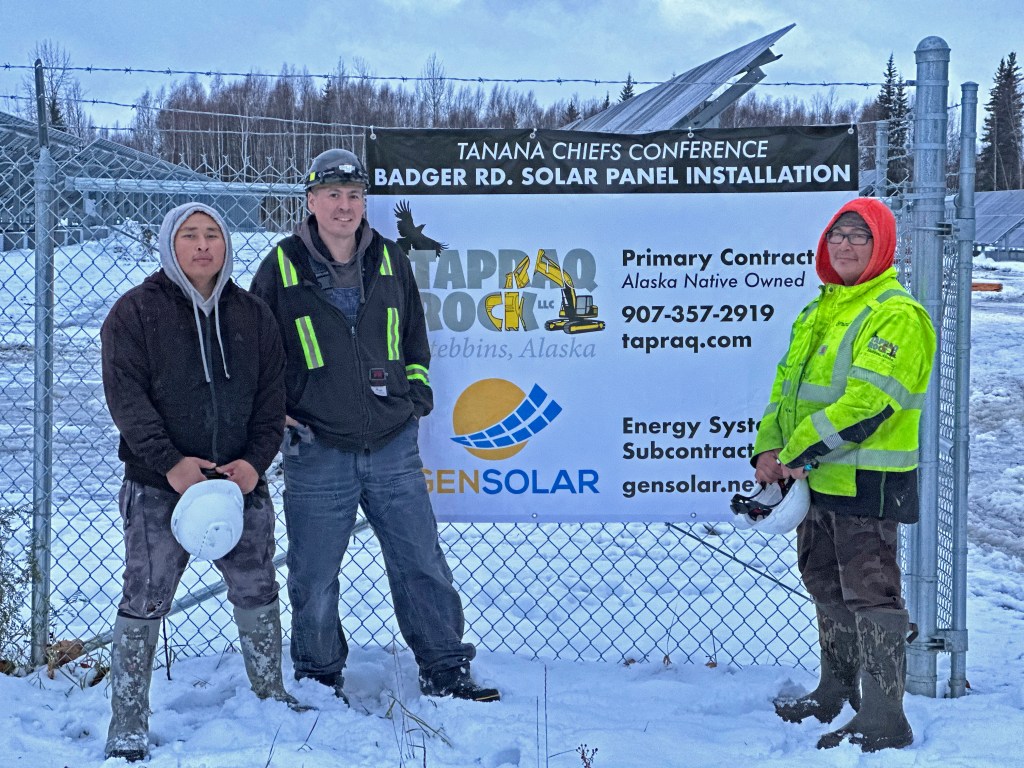
Tapraq Rock’s foreman, Bernard, and laborer, Peter, set the standard for hard, fast work in all conditions, demonstrating in Interior Alaska what it looks like when Stebbins residents go to work.
 Tapraq Rock